Arvin Golrokh,
Visione Fantastica
La Fenice
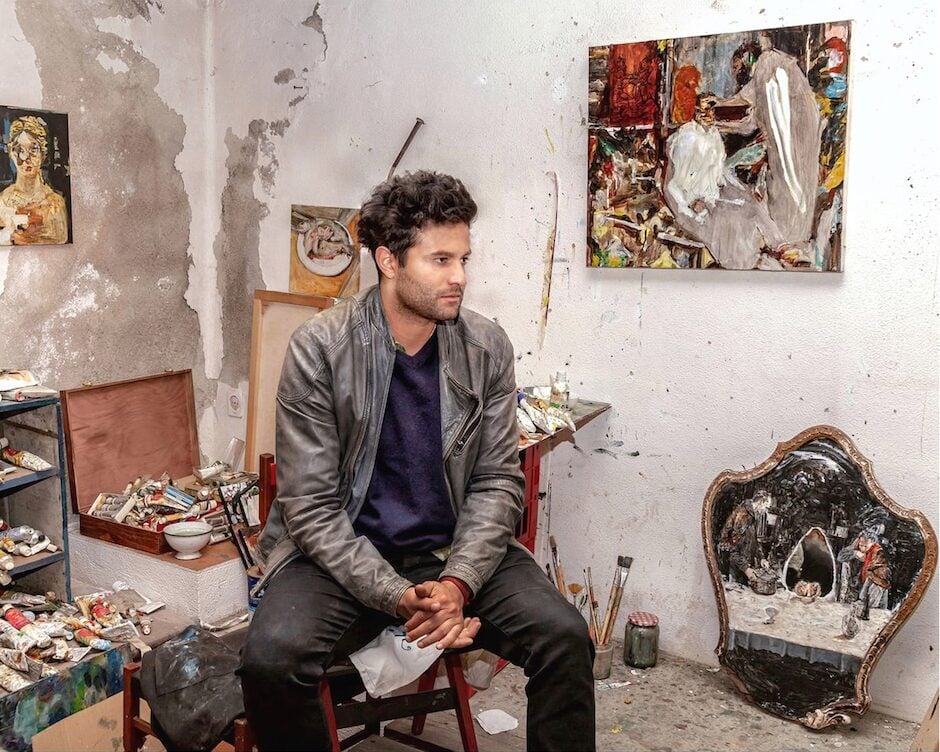
Arvin Golrokh, phot. Alberto Moroni, courtesy of the artist
In Arvin Golrokh’s work, painting serves as a medium for exploring the world. The artist’s distinctive and somber visual language invites viewers to engage with profound questions about the human condition. His paintings resonate with themes of existential solitude, political tension, and the experience of migration.
Golrokh rarely speaks directly. References to his homeland, Iran, are subtle and hidden beneath layers of symbols and gestures. Yet this discreet presence is palpable in every work. His paintings are riddles filled with contradictions. As Golrokh himself notes, rather than concealing disruptions, he magnifies them to confront the viewer with the ambiguity of reality. Painting becomes a field of tension. His works offer no easy answers; instead, they present a raw vision – one steeped in pain but not without hope.
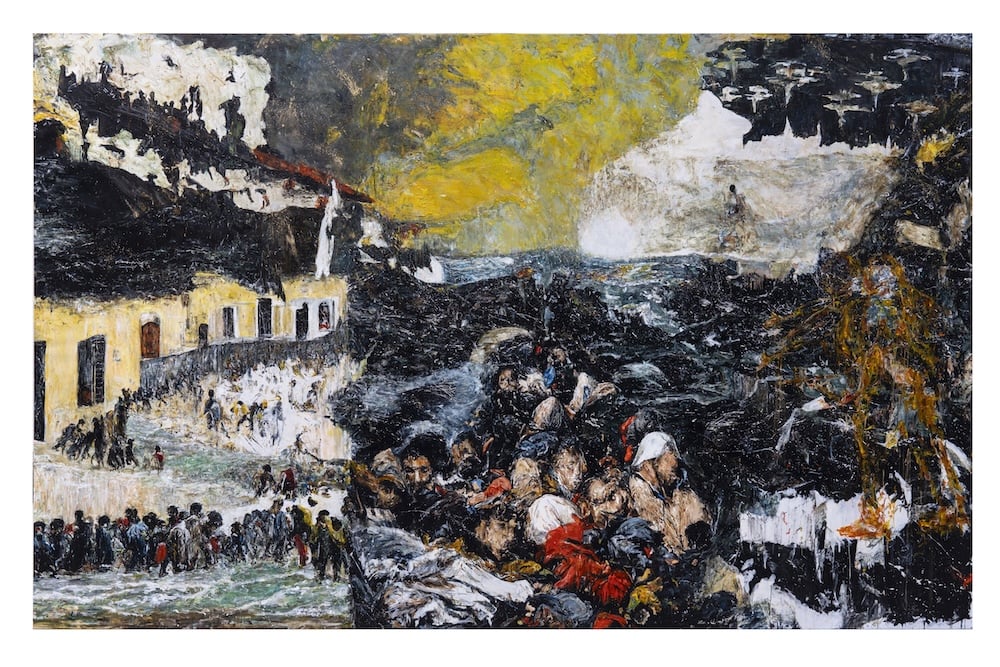
Arvin Golrokh, Visione fantastica, 2024, oil on canvas, 220,5 x 348 cm, phot. Arvin Golrokh, courtesy of the artist
Visione Fantastica is one of the artist’s most monumental works. In this piece, Golrokh reinterprets the aesthetic of the Old Masters to express the anxieties of the contemporary world. The title references a painting by Francisco Goya, whose Fantastic Vision depicts a world engulfed in chaos, poised between dream and wakefulness. In Goya’s original, we see figures of fleeing refugees and a soldier aiming his weapon at them.
Their gazes diverge in opposite directions, and the atmosphere of fear and flight imbues the scene with an almost apocalyptic intensity. By invoking this motif, Golrokh not only engages in a dialogue with the history of painting but also situates his work within the universal and still-urgent themes of migration, trauma, and uncertainty.
The central space of Golrokh’s Visione Fantastica is dominated by a vast, heavy sea. On its surface, faceless figures drift in small boats. Shadowy silhouettes aim weapons at them – sketched forms, not quite real, like personified fears. Above the water, where seabirds might traditionally soar, drones hover instead. Golrokh creates a landscape in which past and present merge into a single, tragic vision.
The collection also includes two works by Golrokh from the La Fenice series, inspired by the myth of the phoenix, the legendary bird that rises from its own ashes. Although the phoenix does not appear literally in every composition, its symbolic presence is strongly felt. The series is centered around the themes of rebirth, endurance, and the possibility of new beginnings.
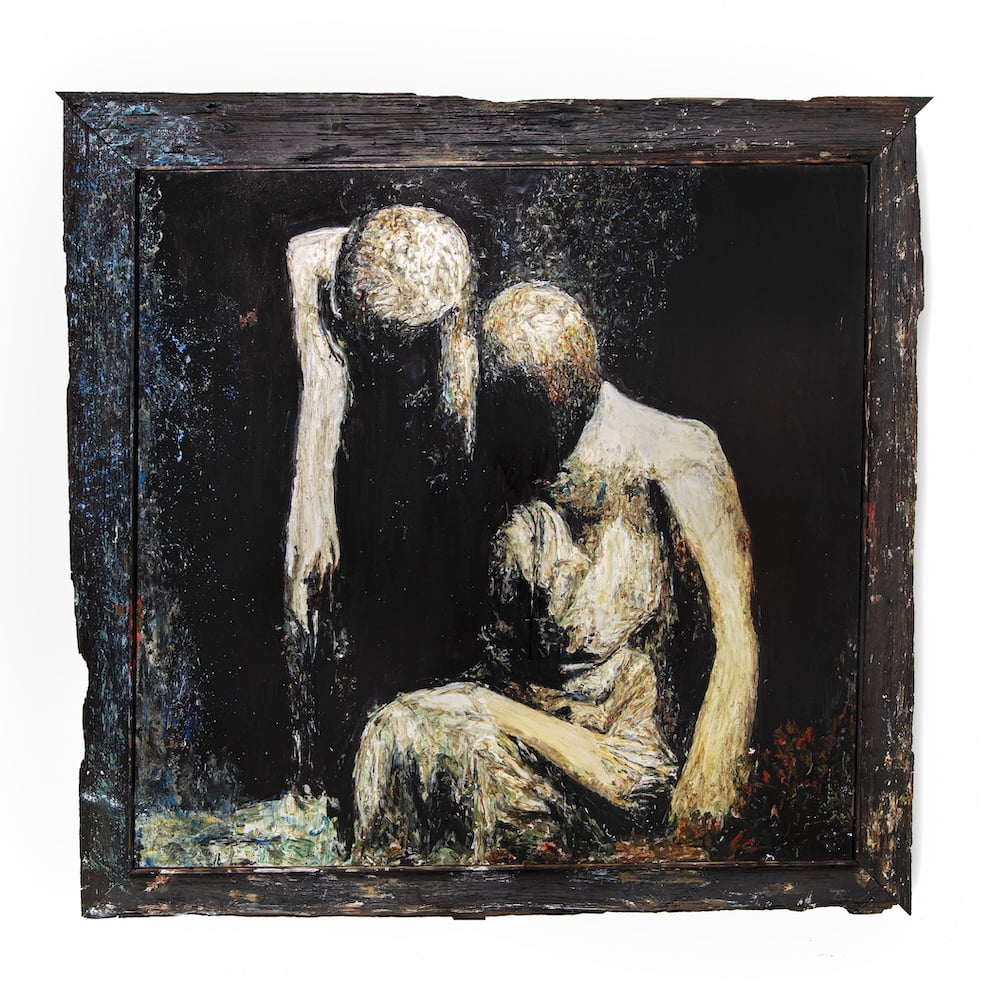
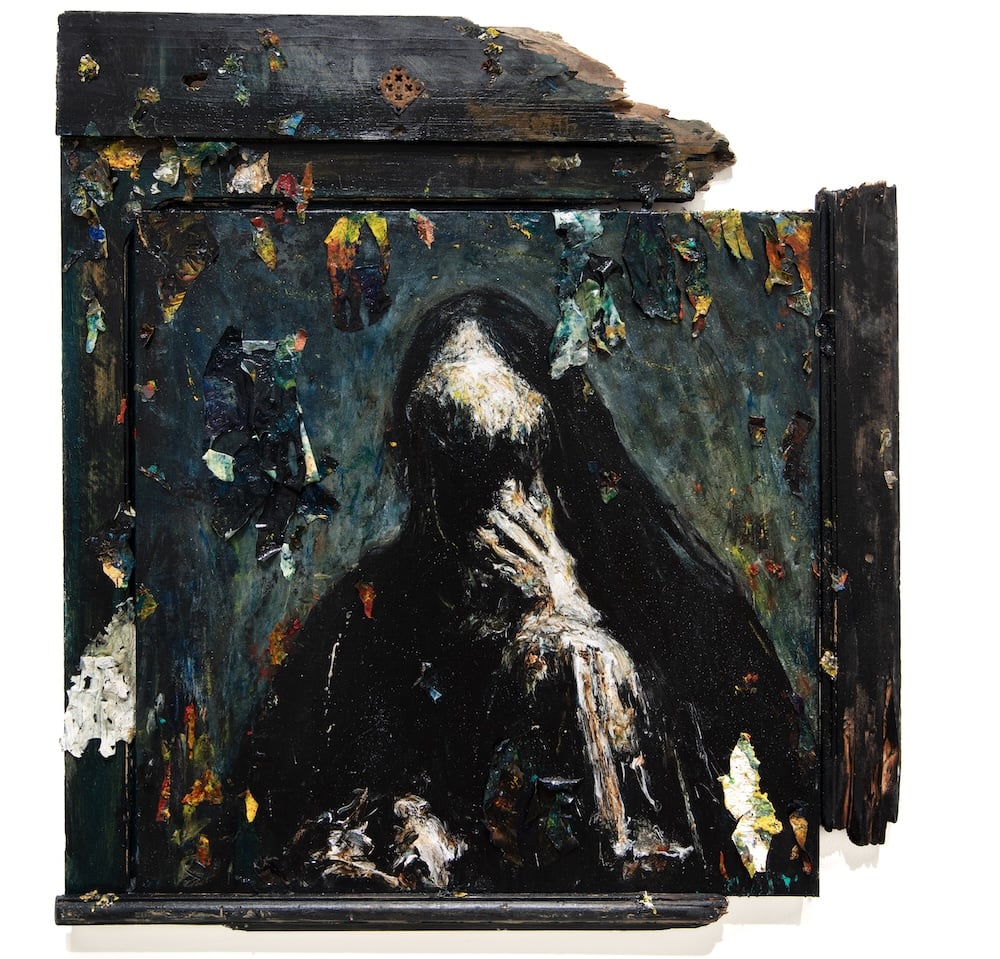
In contrast, La Fenice 10 focuses on individual experience. The composition is dominated by the figure of a woman wearing a hijab, her face obscured by a skeletal hand and reduced to a black, formless void. Deprived of features, she loses her individuality, becoming a symbol suspended between existential pain and political metaphor.
The painting gains intensity through its materiality: expressive brushstrokes and dried oil paint applied directly from the palette onto the canvas and frame. The surface becomes almost sculptural, while the scorched, cracked frame deepens the emotional disquiet. Golrokh reminds us that rebirth from ashes, as evoked throughout La Fenice series, is not possible without first passing through destruction.
Arvin Golrokh’s works occupy a unique position within the dela.art collection, as they blend deeply rooted references to art history with a sharp and uncompromising reflection on the present. The artist constructs a bridge between the past and the contemporary, revealing the continuity of processes such as violence, exclusion, and migration, as well as the enduring human longing for renewal and connection. His paintings engage with classical themes, symbols, and gestures while remaining firmly grounded in the social and political realities of our time.
An equally important aspect of Golrokh’s practice – particularly relevant to the focus of the collection – is his innovative approach to easel painting. He treats the frame not as a boundary but as an integral part of the composition, often subjecting it to acts of destruction or distortion. Dried paint, scorch marks, and cracks give the works a seemingly “aged” surface that paradoxically intensifies their contemporary message.
Text: Anna Bykova
1 Demetrio Paparoni, “From Muhammad Siyāh Qalam to Arvin Golrokh, by Way of Goya,” in Arvin Golrokh: Fantastic Vision (Milano–Lugano: Prima Marella Gallery), 41.
2 Demetrio Paparoni, “Arvin Golrokh’s Embrace,” in Arvin Golrokh: Fenice ante fata resurgo (Milano: Prima Marella Gallery, 2024), 36.