32nd Pontevedra Art Biennial returns with 60 artists from 28 nationalities reflecting on the world at war
Founded in 1969 as a local art initiative, the Pontevedra Art Biennial grew rapidly throughout the 1980s and solidified its international standing in the following decade. By the 1990s, it had become a nationally recognized artistic event, evolving its format to support an expanding exhibition program that soon became a staple of Spain’s contemporary art scene.
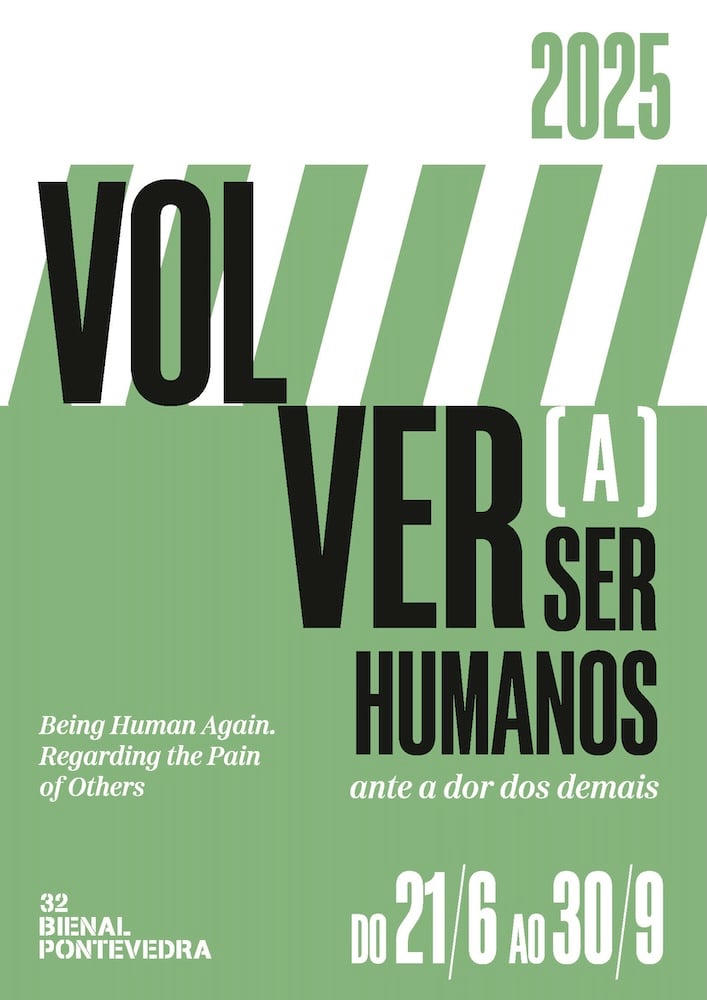
This year’s edition is held under the theme Back to Being Human. Faced with the Pain of Others and curated by Antón Castro. The conceptual framework is inspired by the ideas of Rob Riemen and Susan Sontag. In Castro’s words: “To be human again is to recover enlightenment, humanity, love. We want this exhibition to carry a democratizing consciousness – we want it to be an act of empathy with citizens.”
The exhibition seeks to juxtapose the darkness of war with the light of hope, using art as a lens through which to explore past and present conflicts, and to imagine new, more compassionate futures. The Biennial brings together internationally acclaimed artists and emerging voices. Themes such as spirituality, love, tolerance, truth, and utopia are addressed through diverse media including painting, installation, video, photography, sculpture, and performance.
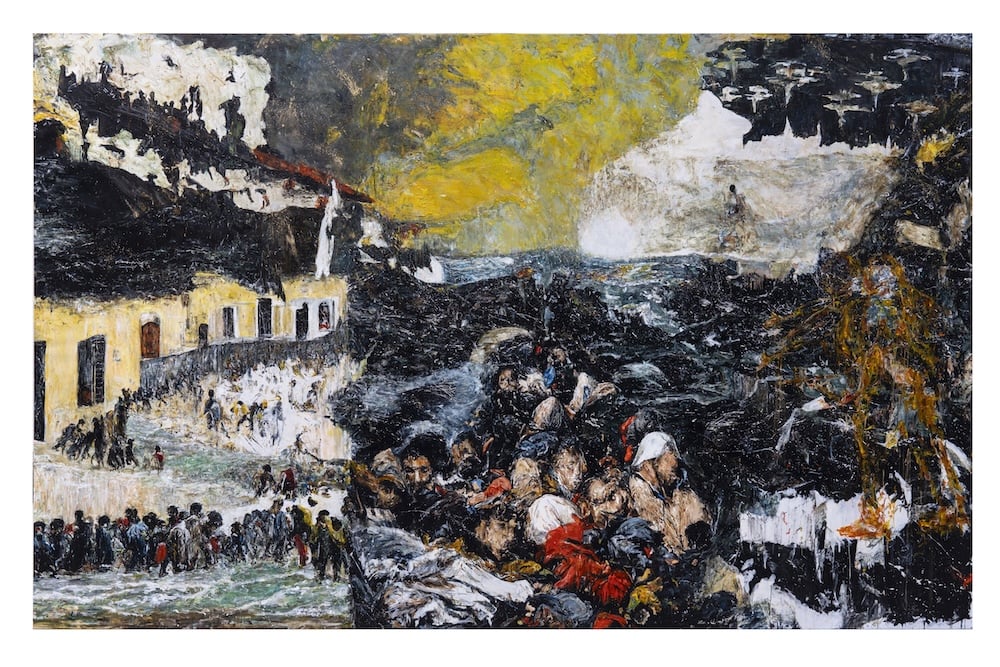
Among the works on view is Visione Fantastica by Arvin Golrokh, part of the dela.art collection.
Arvin Golrokh is an Iranian artist who lives and works in Italy. He regards painting as a critical tool for examining the mechanisms of control exercised by institutions over collective perception.
His work investigates the visual construction of power, propaganda, and the manipulation of historical memory. Through dense, fragmented compositions populated by authority figures in uncanny or disorienting contexts, Golrokh disrupts official narratives and reactivates suppressed memories. In recent years, his practice has focused on the contrasts between control strategies employed in his home country and those operating in the Western world, questioning the ways in which the images we consume daily are created.
Golrokh draws upon legacy of old masters to point to the continuity of certain unresolved social processes. By referencing canonical imagery within contemporary contexts, he highlights how the tensions and injustices of the past persist, echoing through the present.
For Golrokh, maintaining a critical and independent vision is vital in the face of any attempt at cultural homogenization.
More about: