A Hundred Nightly Spectres Ghouls, Ghosts and Demons in Japanese and Western Art
The exhibition A Hundred Nightly Spectres Ghouls, Ghosts and Demons in Japanese and Western Art, which opened on June 1, 2025, at the Manggha Museum of Japanese Art and Technology in Kraków, explores how Japanese and Western cultures have envisioned ghosts, demons, and specters – from traditional legends to contemporary pop-culture phantoms. By juxtaposing Japanese yōkai with European spirits and Slavic bogeymen, the exhibition reveals how “nocturnal apparitions” transcend geographical and temporal boundaries, exposing universal fears and fascinations with the unknown.
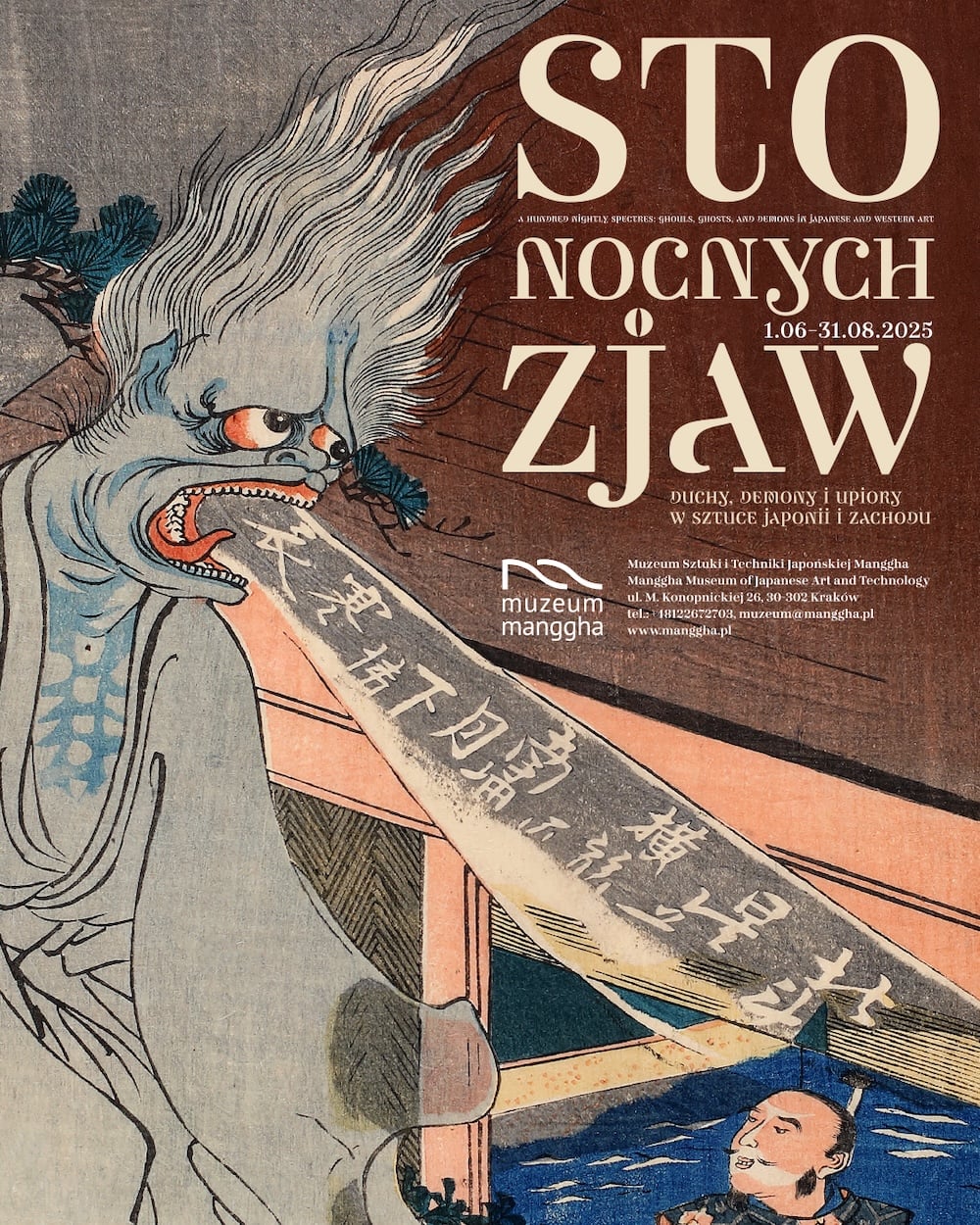
The display features over 70 color woodblock prints from the collection of Feliks “Manggha” Jasieński, enhanced by additional prints donated by Raymond Milewski. These works are presented alongside pieces from the eighteenth to the twenty-first century, including oil paintings, pastels, collages, sculptures, spatial installations, and prints. This extensive range of periods, sensibilities, and techniques demonstrates how supernatural phenomena evolve within artistic language while serving as a powerful means of expressing experiences of otherness.
Among the works on display is Zahl L. Betender Knabe from the dela.art collection, created by Wojciech Ireneusz Sobczyk. This drawing references the anatomical model exhibited at the German Hygiene Museum in Dresden. However, in Sobczyk’s interpretation, the transparent body reveals not a network of blood vessels, but a tangle of proliferating plant branches. The artist replaces the biological order of veins and arteries with the organic chaos of wild flora.
Here, the metaphor of the weed serves as a powerful image of exclusion and stigma, resonating with Nazi eugenic rhetoric that categorized human life based on standards of utility. This work aligns with the exhibition’s broader narrative, illuminating what has been repressed and dehumanized while affirming the untamed force of nature as a source of survival and resistance.
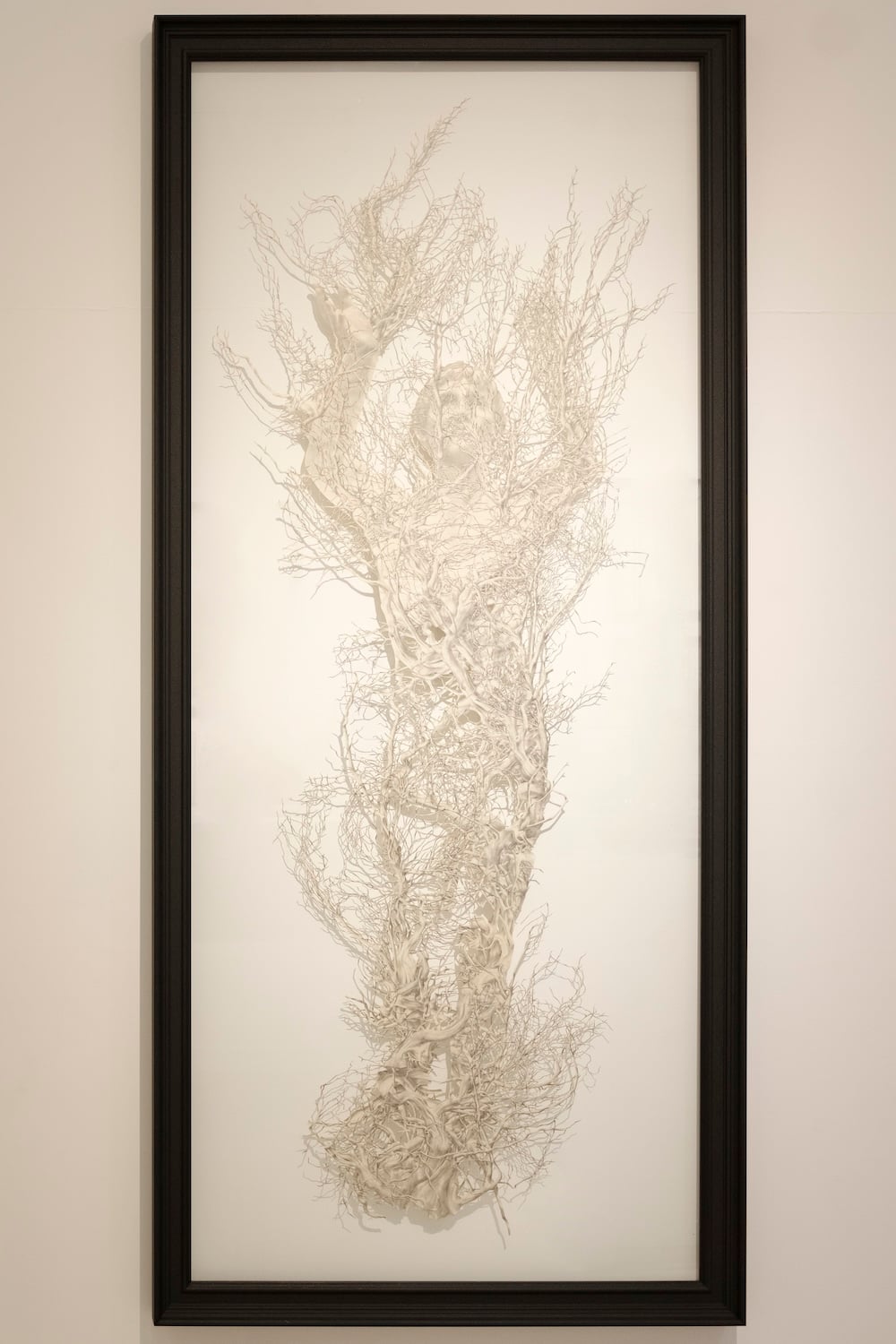
phot. Bartosz Górka, courtesy of the Leto Gallery
Artists: Natalia Buchta Stochel, Sławomir Celiński, Dorota Ćwieluch-Brincken, Krzysztof Gil, Francisco José de Goya y Lucientes, Gyokuen Bonpō, Marcin Janusz, Michał Kastory, Katsukawa Shunshō, Katsukawa Shuntei, Kawanabe Kyōsai, Kitao Masayoshi, Kitao Shigemasa, Henryk Kunzek, Antoni Kurzawa, Kamil Kuzko, Konstanty Laszczka, Jacek Malczewski, Kaja Mucha, Nabeta Gyokuei, Kinga Nowak, Witold Pruszkowski, Jan Raszka, Odilon Redon, Mikołaj Rejs, Ferdynand Ruszczyc, Wojciech Ireneusz Sobczyk, Witold Stelmachniewicz, Zofia Stryjeńska, Totoya Hokkei, Tsukioka Yoshitoshi, Utagawa Hirokage, Utagawa Hiroshige, Utagawa Hiroshige II, Utagawa Kunisada (Toyokuni III), Utagawa Kuniyoshi, Utagawa Sadahide, Utagawa Toyokuni I, Utagawa Yoshikazu, Utagawa Yoshimori, Utagawa Yoshitsuya, Marian Wawrzeniecki, Wojciech Weiss, Grzegorz Wnęk, Witold Wojtkiewicz, Jan Woydyga, Andrzej Wróblewski, Leon Wyczółkowski, Stanisław Wyspiański, Yamamoto Shōun, Yashima Gakutei, Michał Zawada, Jakub Julian Ziółkowski
Exhibition idea, script and design: dr hab. Anna Król, prof. ASP
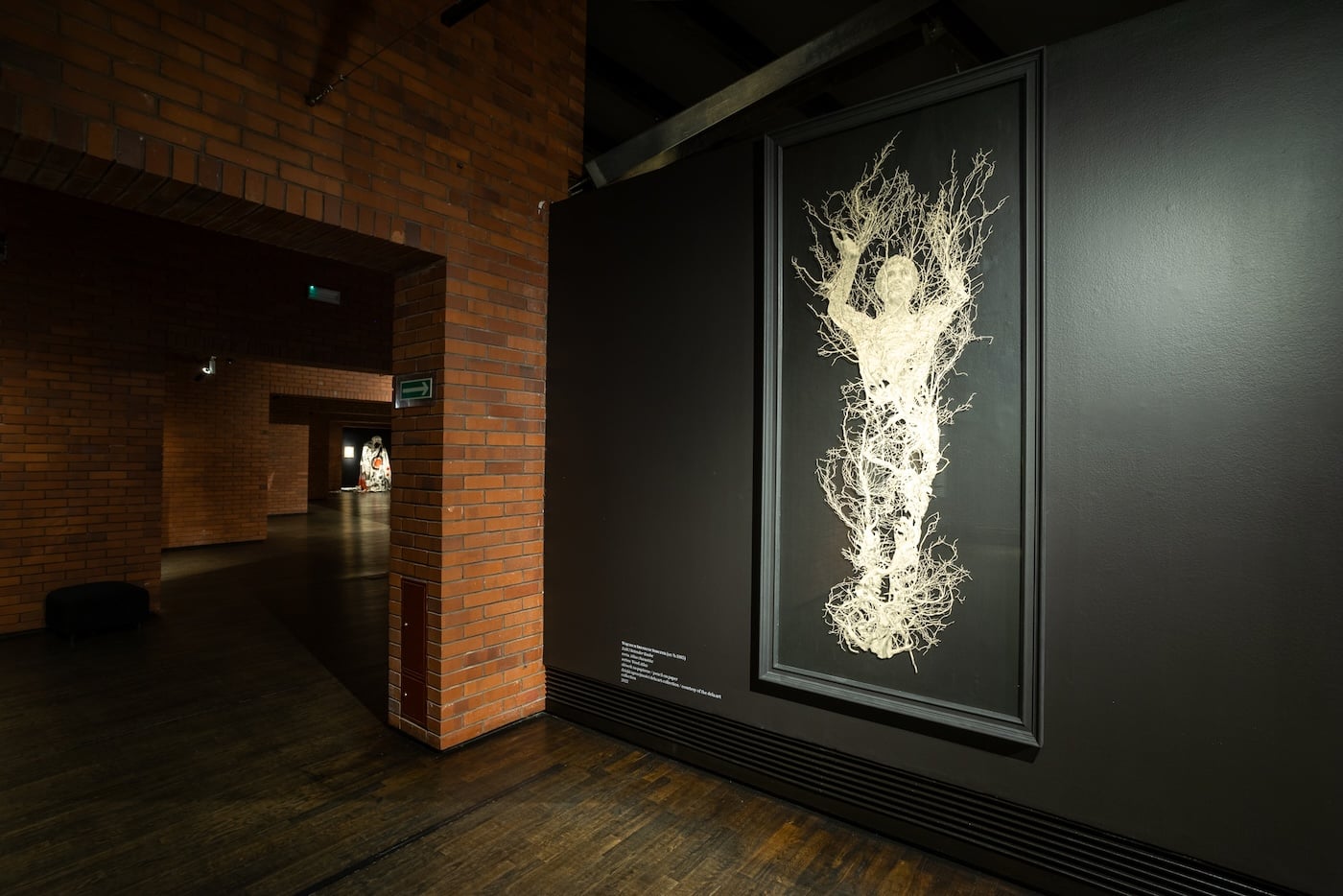
phot. Kamil A. Krajewski (Manggha Museum Archives)
More about the exhibition: