Art in the Face of the Climate Crisis
One of the central themes of the dela.art collection is a reflection on the natural environment. The collection encourages a responsible attitude toward both nature and society by gathering and making accessible works by artists who address the condition of the Earth, the threats posed by neglecting human impact on nature, and the possibilities of restoring balance through non-invasive symbiosis with the natural world. United by a shared purpose, these artists employ diverse forms of expression, media, and narrative strategies to raise awareness about the climate crisis.
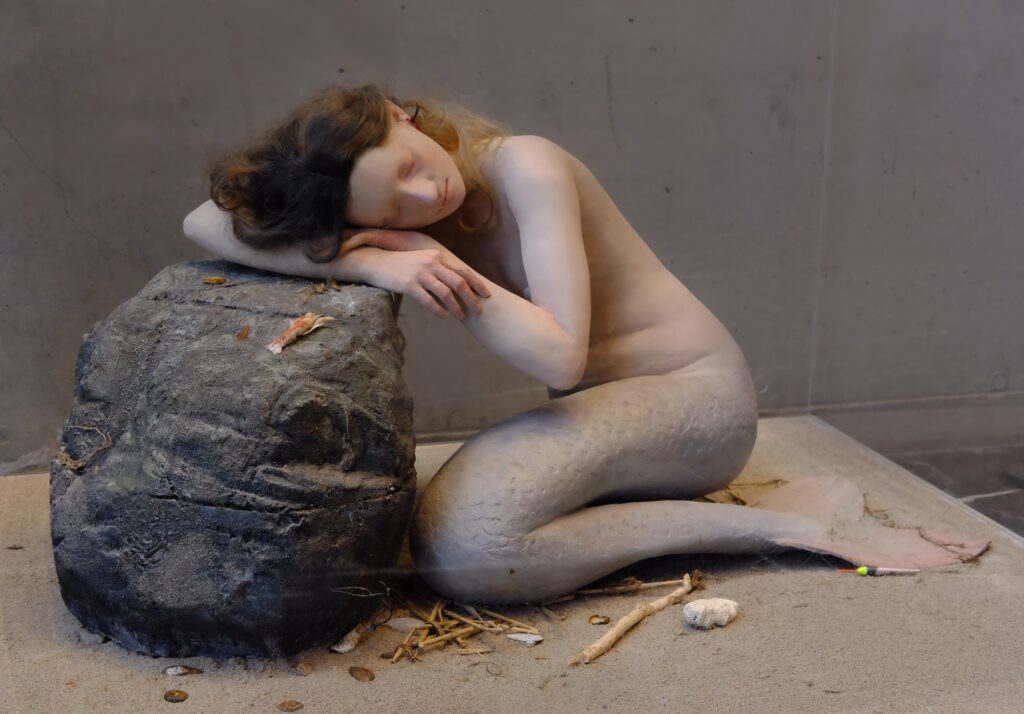
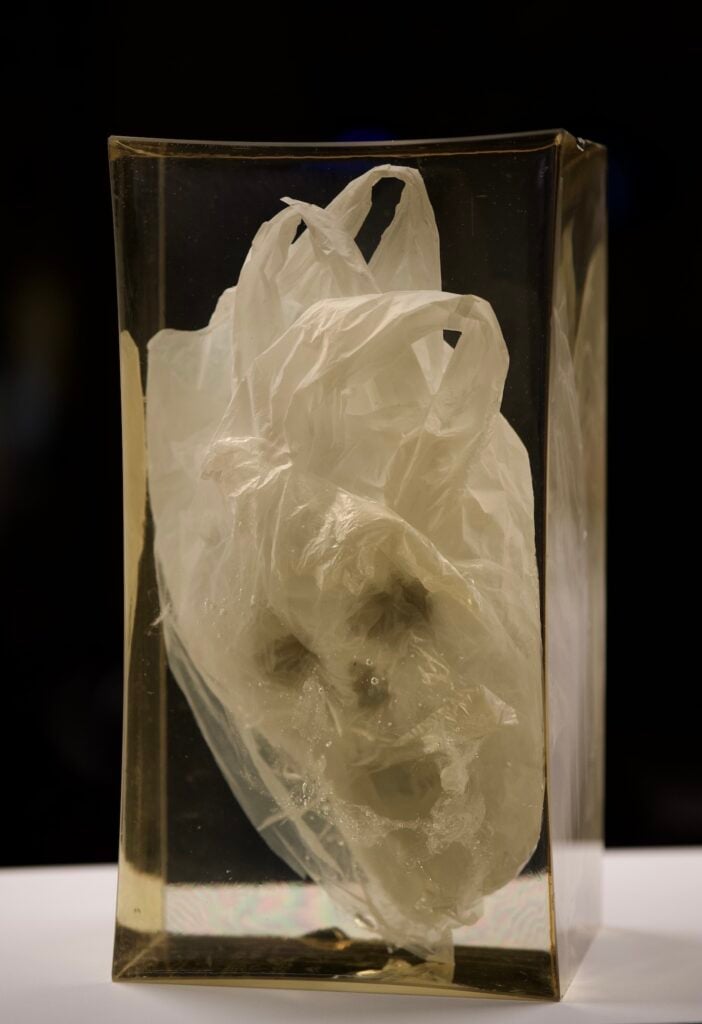
One way to address the irreversible consequences of human interference with the environment is through the animation or anthropomorphization of nature by endowing it with distinctly human traits – specifically, emotionality. This strategy is evident in the works of Cyryl Polaczek and Marek Bimer.
In Polaczek’s installation Mermaid, the figure of the legendary heroine rests among marine debris, with a hook in her mouth and a lure in her ear. Created in the aftermath of the ecological disaster on the Oder River, the work does not depict the valiant Warsaw mermaid but rather a pale, melancholic figure marked by a profound sense of loss.
Bimer’s Save the Ocean, in turn, represents the ocean’s scream inscribed onto a face resembling a human skull, formed from a plastic bag. The emotional charge of these works, resulting from the humanization of natural forces, evokes instinctive responses to the climate crisis in the viewer: melancholy, anxiety, and fear. As Timothy Morton observes in his essay All Art Is Ecological: “Right now ecological awareness presents itself as a tragedy. But sooner or later, we will start to smile, which is maybe how we get to smile for real.”2 It is precisely these difficult emotions – often suppressed in a society oriented toward entertainment and instant gratification – that prove essential in realizing our own role in the processes of planetary transformation.
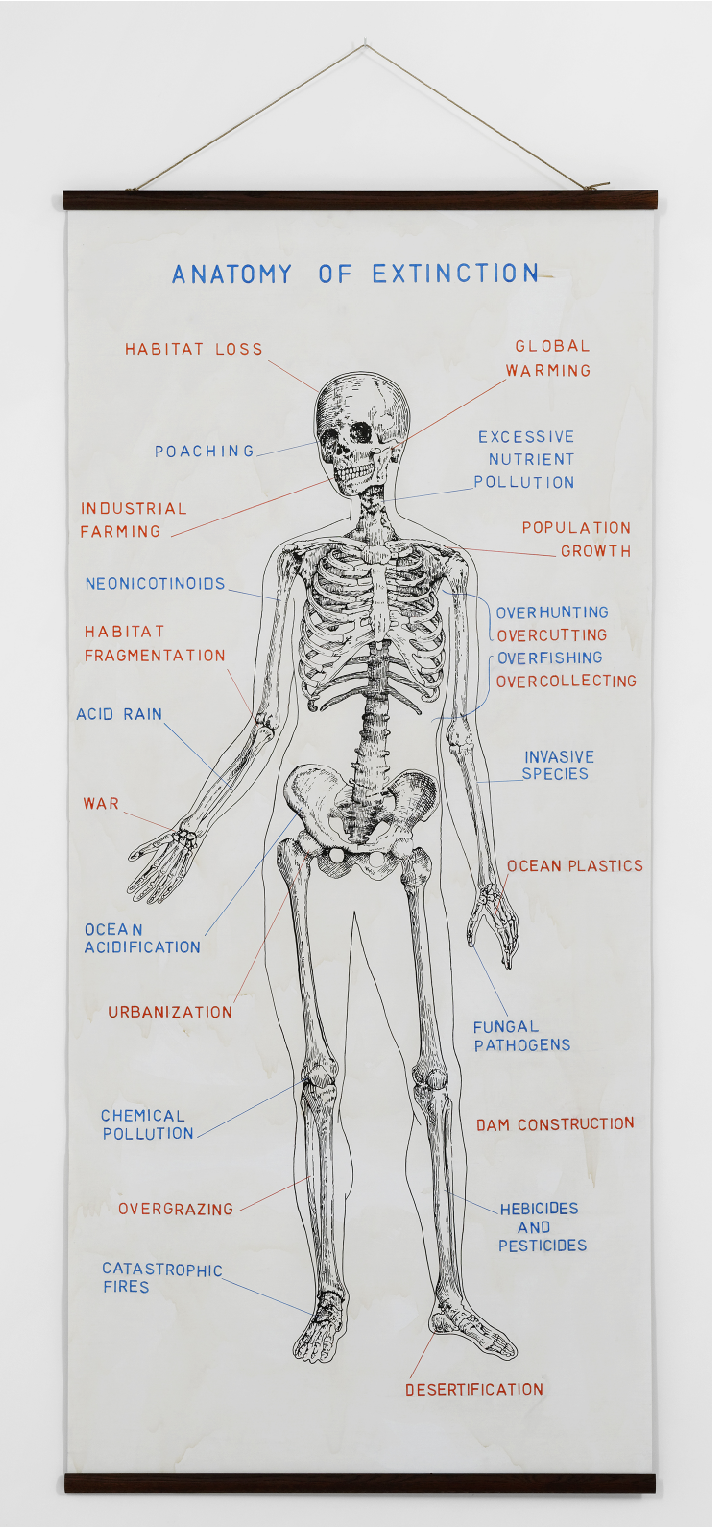
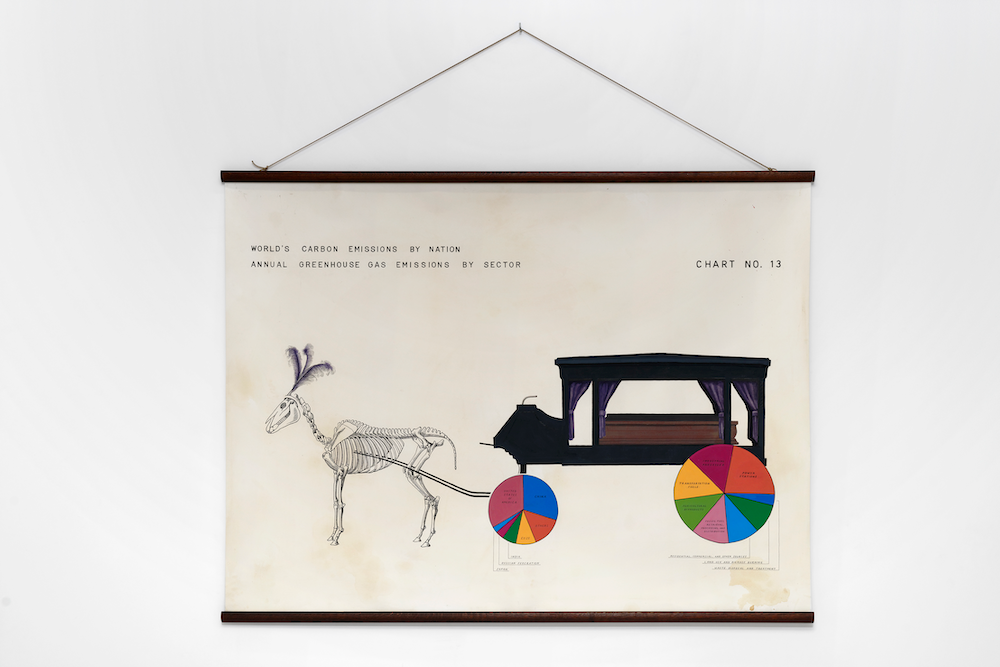
Alongside emotional narratives in art that address the natural environment, there emerges an almost opposite tendency – the invocation of scientific discourse. Mark Dion, as well as the duo Ariamna Contino and Alex Hernández-Dueñas, employ charts, diagrams, maps, and other tools of academic analysis in their work. In Dion’s practice, the language of science intertwines with irony. In Anatomy of Extinction, the human skeleton serves as a reminder that terms such as global warming, carbon emissions, and ocean acidification are not abstractions but consequences of human errors we attempt to veil with specialized vocabulary.
Similarly, Chart No. 13 presents a funeral cortege rolling on wheels made of diagrams depicting CO₂ emissions – emphasizing that raw data and percentage calculations do not halt environmental degradation.
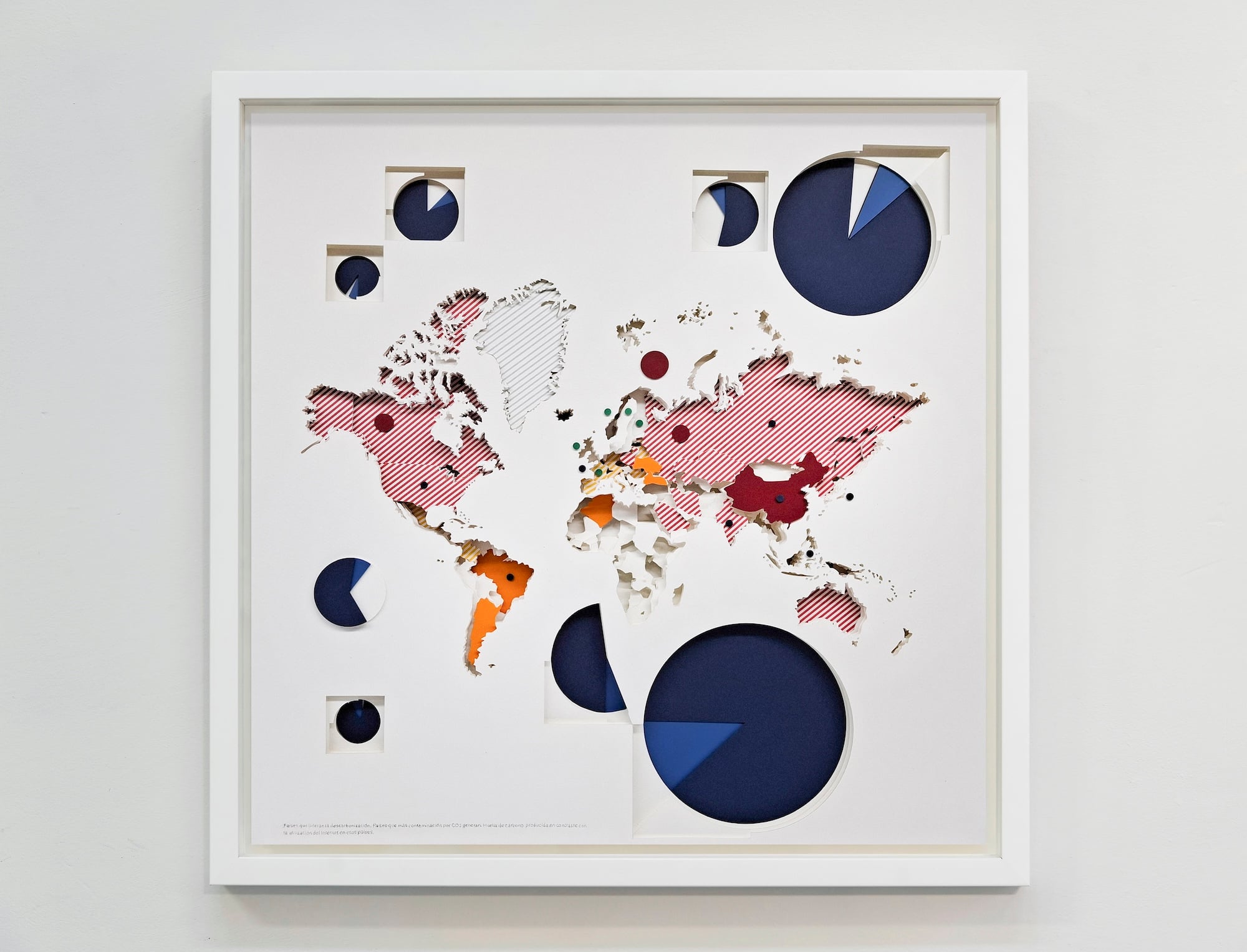
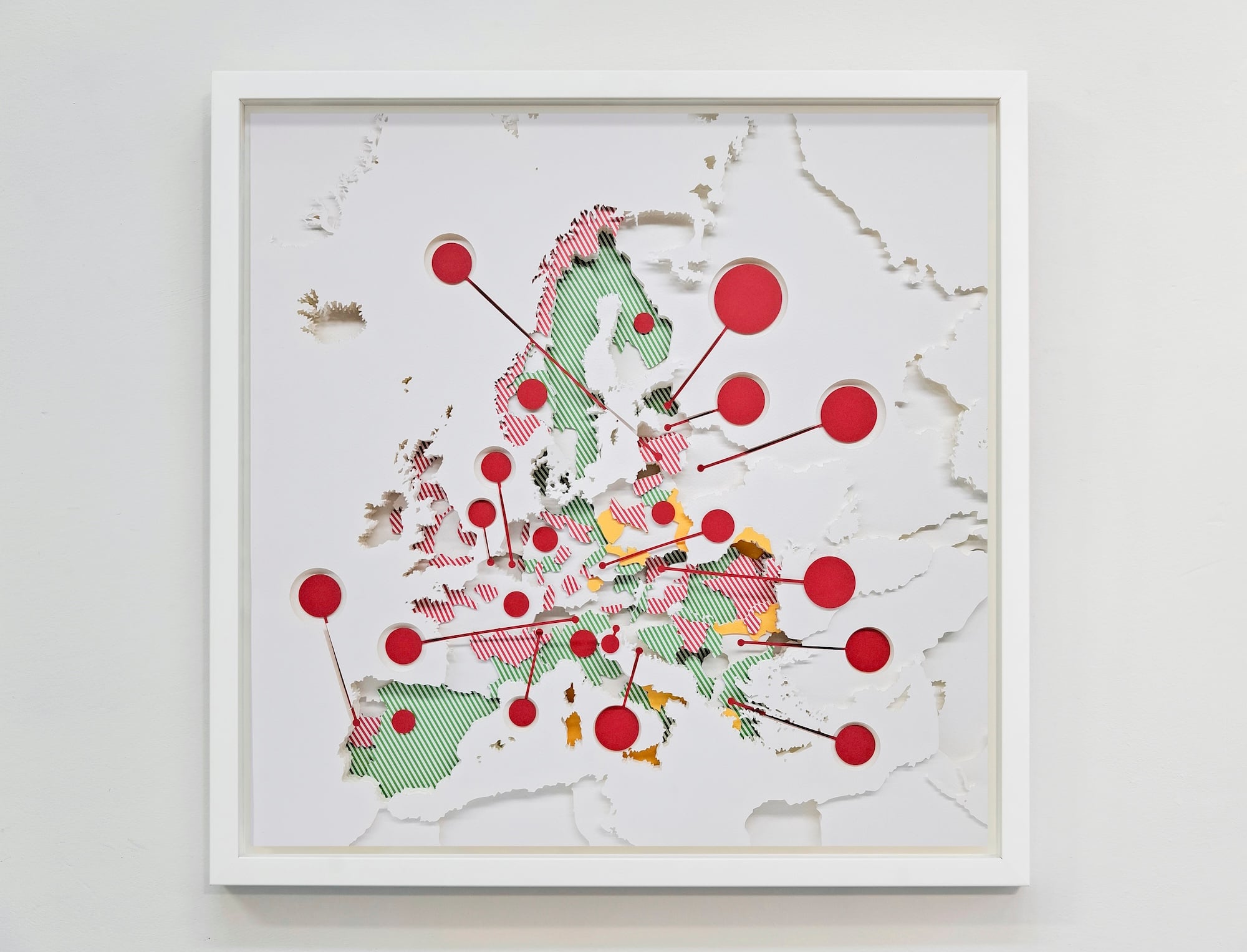
In Forest Fires in Europe Over the Last 4 Years and Countries Leading Decarbonization, Ariamna Contino and Alex Hernández-Dueñas integrate research data into multilayered paper compositions, exposing the paradox: we know a great deal about the scale of the catastrophe, yet do little to stop it. Whether used literally or ironically, the language of science sensitizes us to processes that humanity can describe but has not yet succeeded in halting.
When discussing artists’ self-awareness in relation to human responsibility for the ecological crisis, it is important to note that reflection on the human impact itself becomes a narrative strategy. Agnieszka Polska and Ada Zielińska highlight specific destructive actions in their works that push the planet closer to catastrophe.
In Eclipse 4 from the cycle Braudel’s Clock, Polska references the concept of the Doomsday Clock – a symbolic representation of the countdown to the end of humanity, maintained since 1947 by the Bulletin of the Atomic Scientists. Originally, the clock illustrated the threat of nuclear war, but in the 21st century, it has also come to encompass the consequences of climate change. The number of minutes to midnight is regularly updated based on assessments of the global situation and human actions that affect survival.
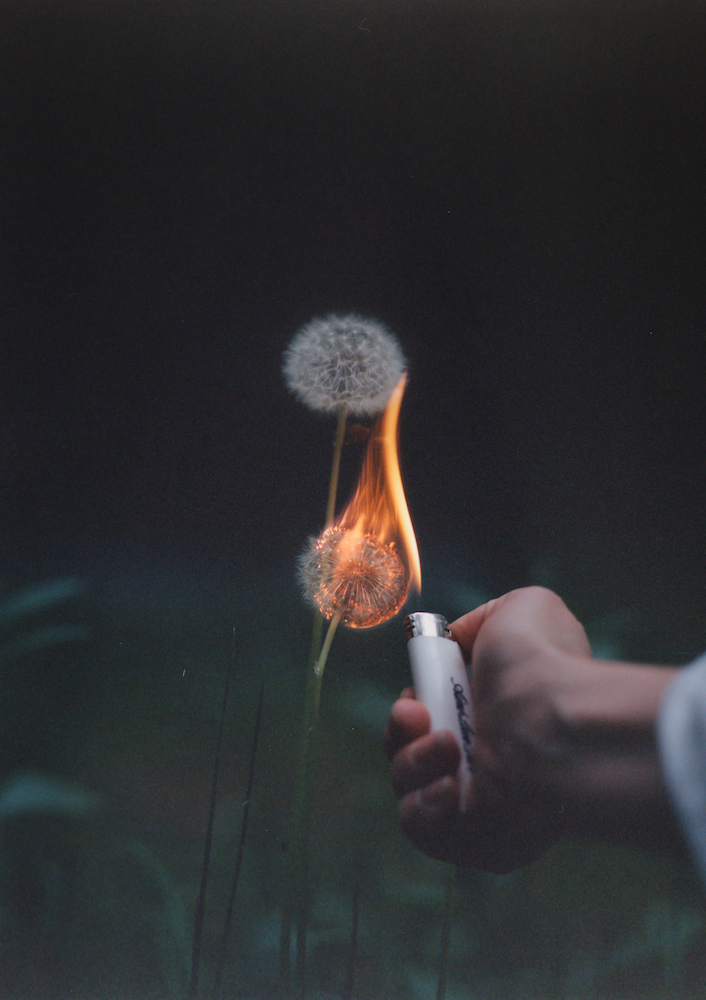
Ada Zielińska, in her photograph Random Behaviour I, depicts a hand setting fire to a dandelion. This seemingly trivial act of vandalism becomes a symbol of environmental destruction often carried out under absurd pretexts, without reflection on long-term consequences. As Timothy Morton reminds us: “Ecological awareness is awareness of unintended consequences.”3
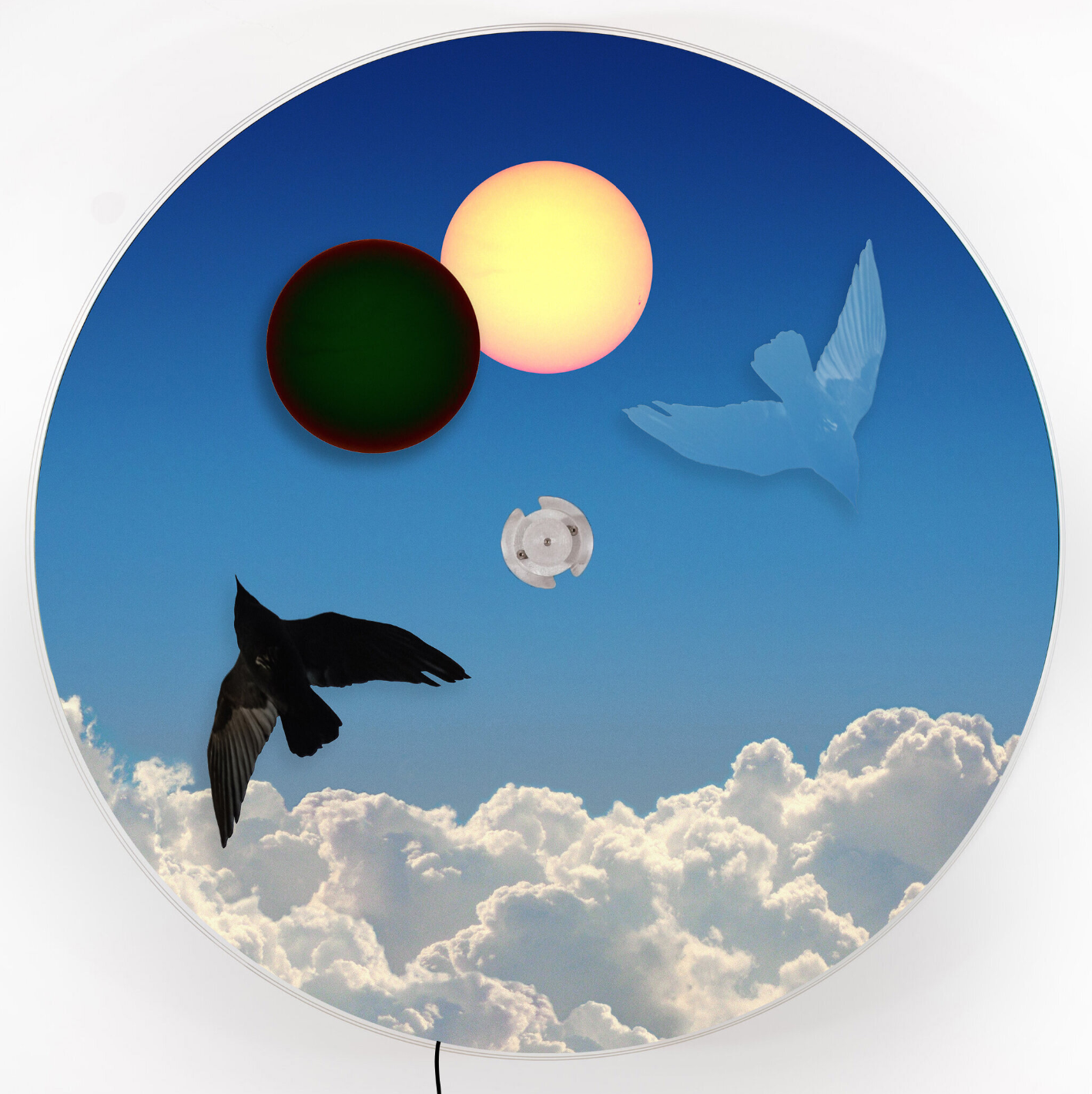
Agnieszka Polska, Eclipse 4, from the Braudel’s Clock series, 2023, Chromalux print on aluminium, UV print on acrylglass, rotating aluminium and steel clock mechanism, 118 × 118 × 17 cm
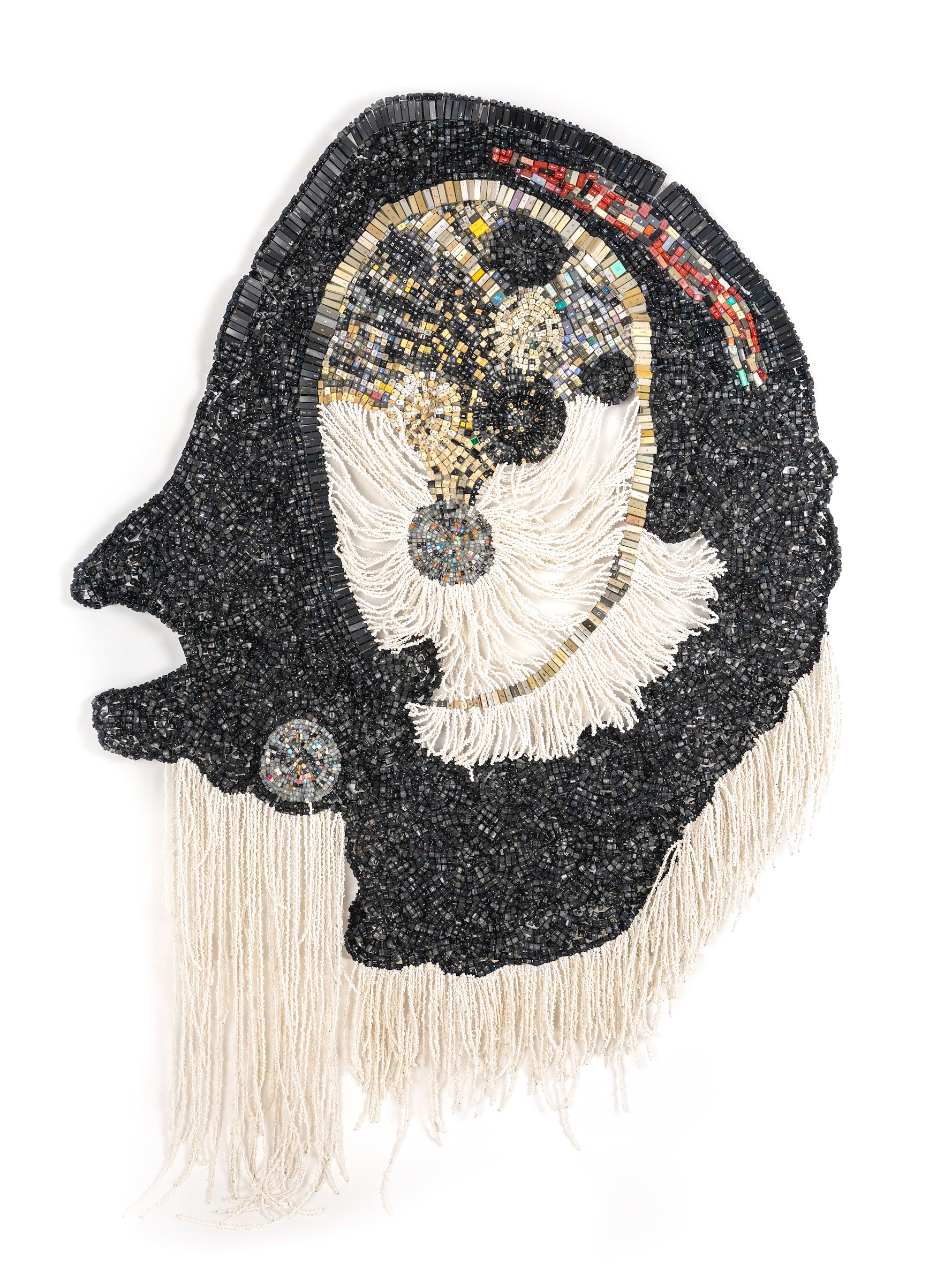
Ecological awareness in contemporary art is expressed not only through the choice of metaphors but increasingly manifests itself in the materials used. Artistic recycling – the creation of works from repurposed materials – draws attention to environmental pollution while simultaneously bestowing new value on discarded objects.
Moffat Takadiwa constructs monumental objects from items found in landfills. His abstract mosaics are composed of meticulously arranged sequences of computer keys, plastic bottle caps, metal lids, toothbrushes, and other everyday waste. For him, recycling becomes a creative manifesto rooted in African traditions, where respect for nature was reflected in practices that minimized the waste of food and everyday objects.
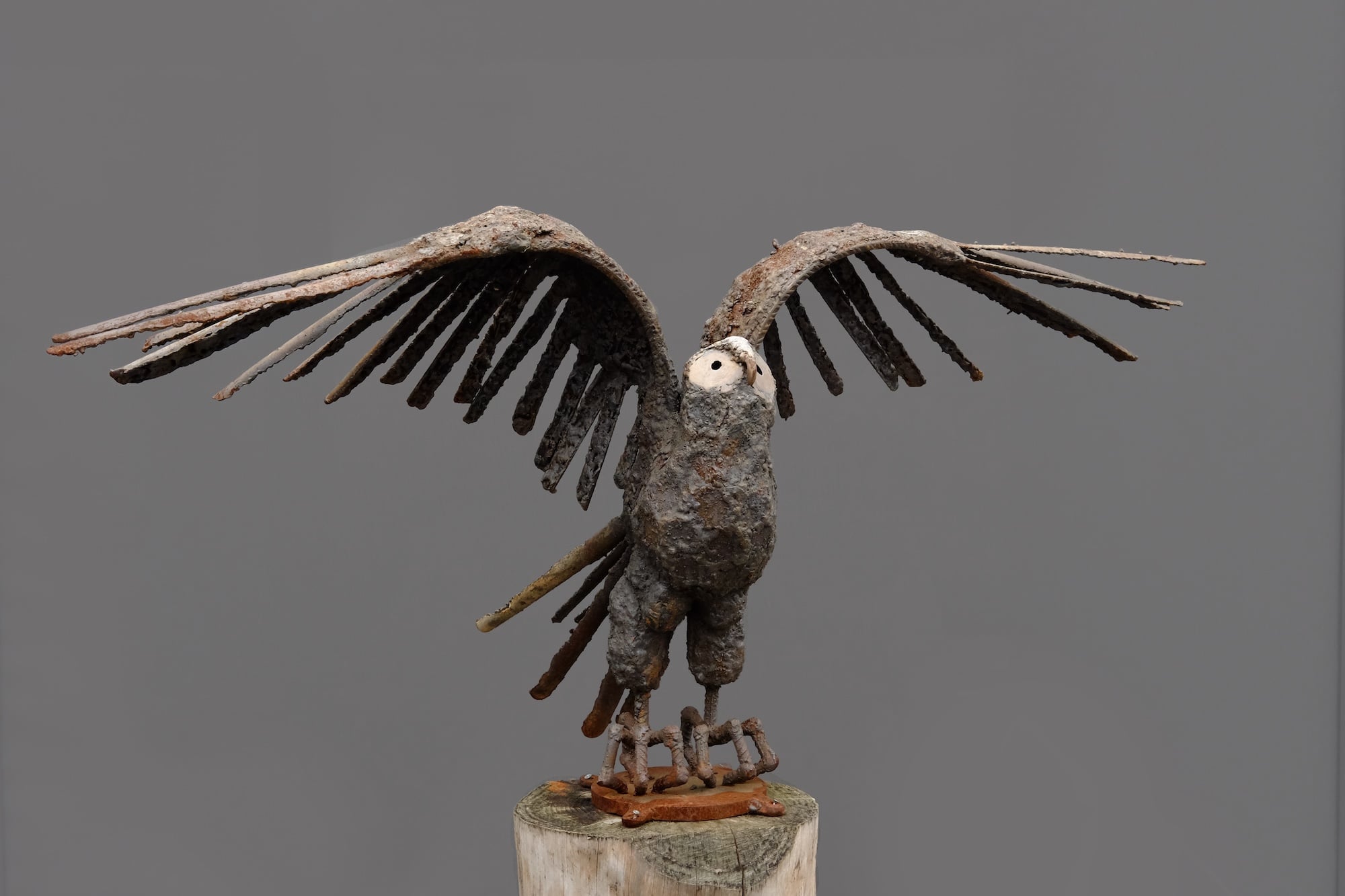
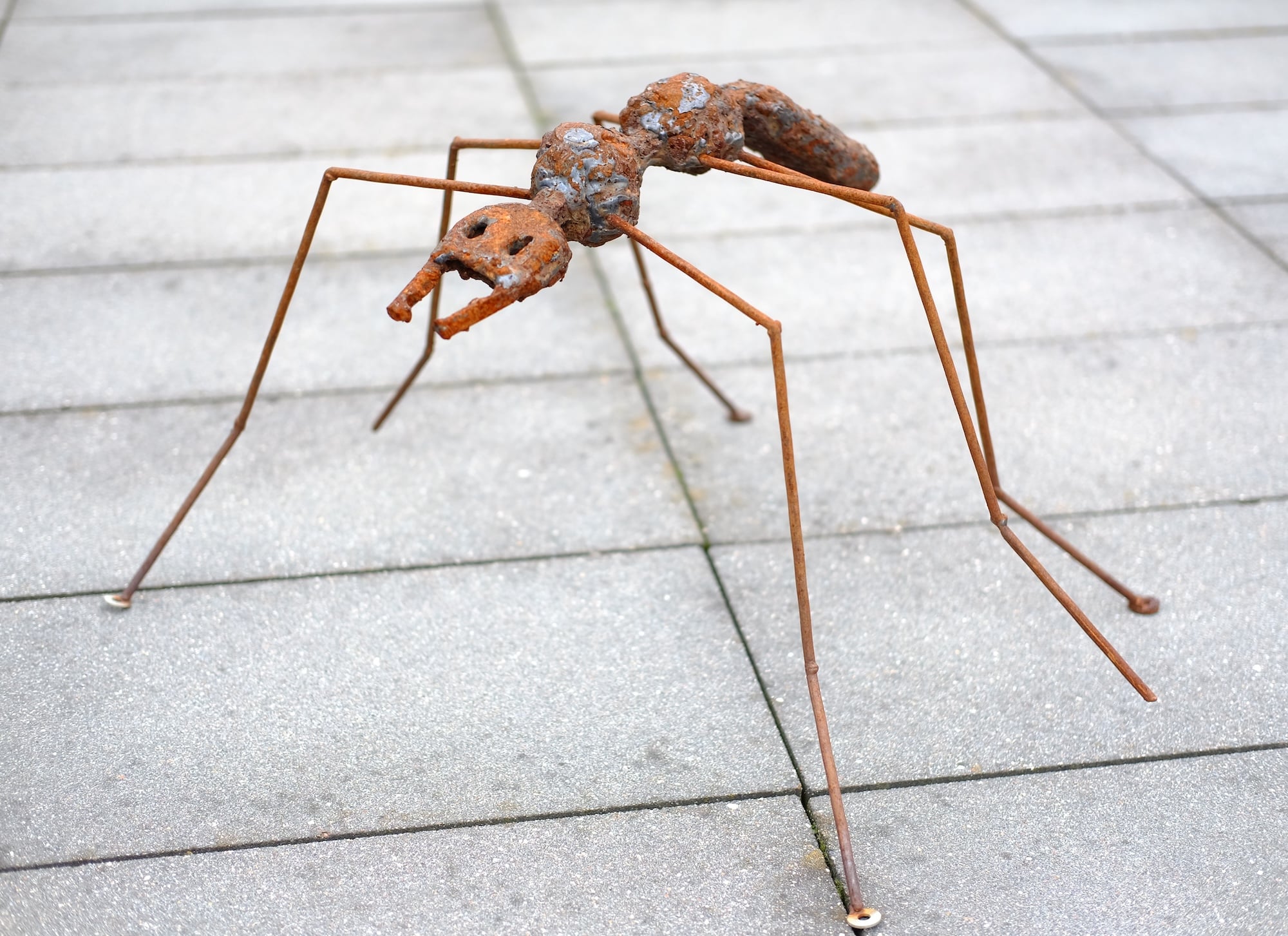
A similar strategy is adopted by Mariola Wawrzusiak, who collects scrap and abandoned metal to transform it into animal sculptures. In doing so, the artist symbolically restores raw materials degraded by humans to the natural world from which they originally came.
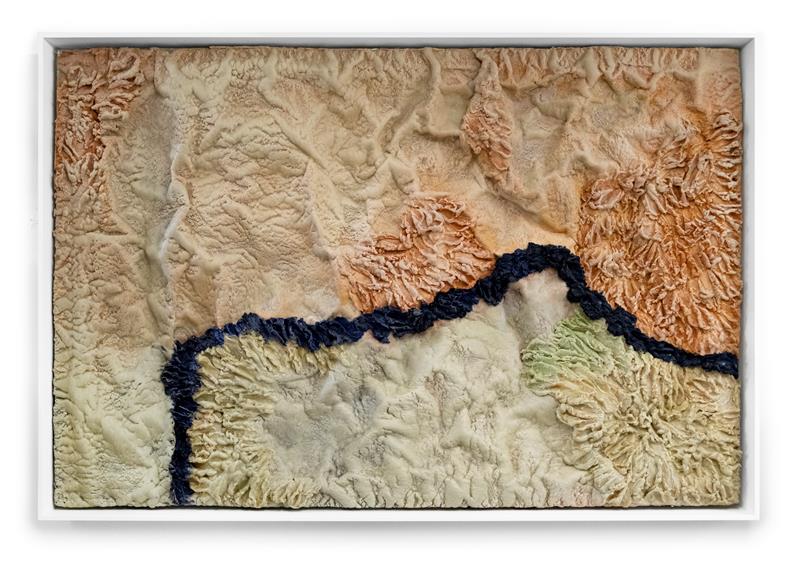
A manifesto expressed through material, in which art conveys a responsibility toward the environment, extends beyond the mere practice of recycling. Angelika Markul and Diana Lelonek turn to natural substances, creating works that emerge in harmony with nature. In her Tierra del Fuego series, Markul depicts the dangerous, unpredictable, yet captivating forces of nature unleashed as a consequence of human error. Her inspiration stems from the Tierra del Fuego archipelago off the coast of South America and the myths surrounding it. The harsh climate and isolation of the islands once led early European explorers to imagine the local peoples as mythical giants. However, their true history was tragic – the Indigenous communities vanished in the 19th century, and today the region’s glaciers themselves face imminent threat. The wax with which the artist sculpts the relief of the archipelago serves as a metaphor for the soft, fragile essence of nature confronting human destruction.
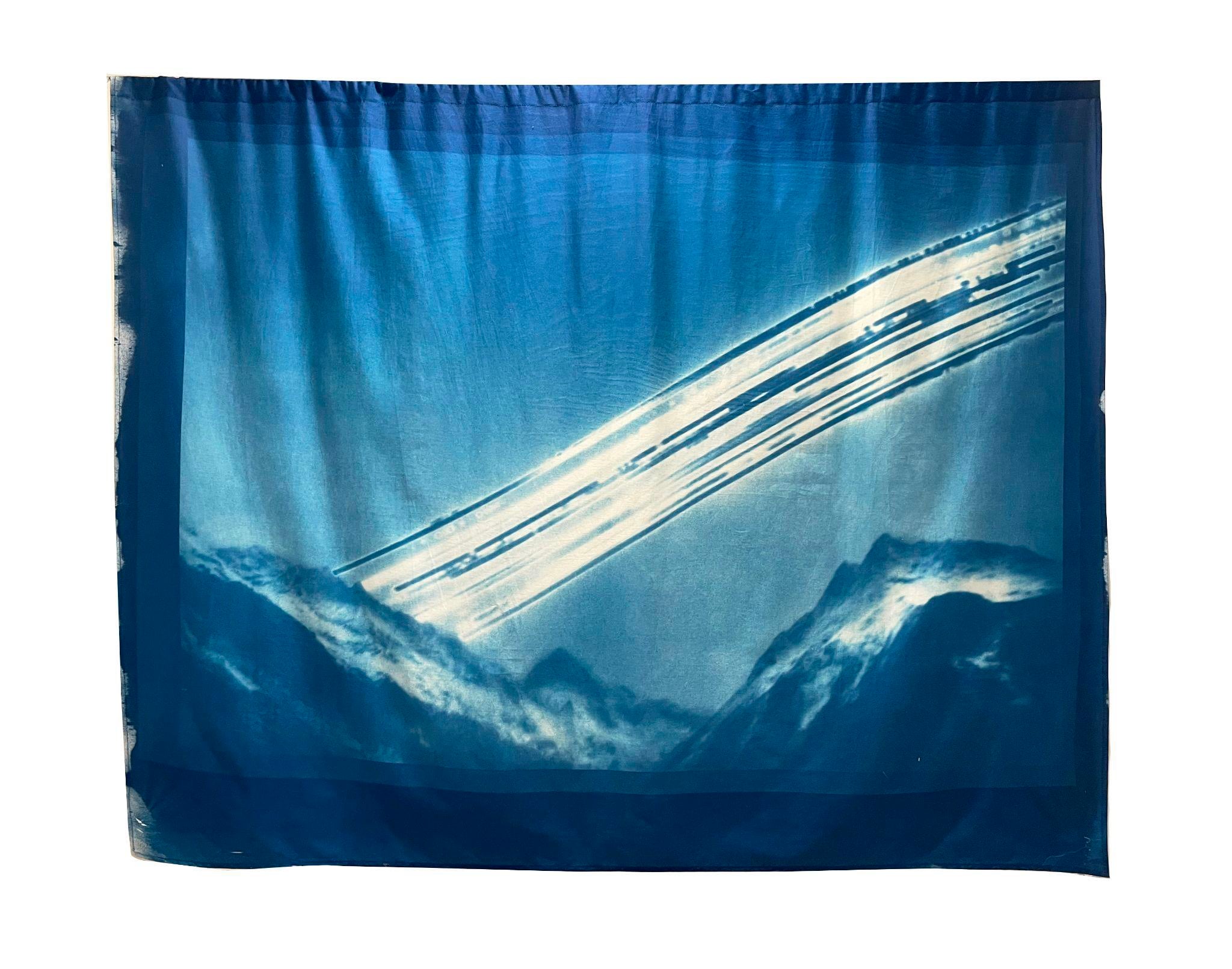
Diana Lelonek also works with organic materials, offering an alternative approach to photography. In her Văcărești Nature Park series, she employs one of the oldest photographic techniques – anthotype – where images are created by exposing plant juices to sunlight. Pressed plant juices are applied to paper and left under the sun’s rays for several days, making each piece unique. For Lelonek, anthotype is not only a formal experiment but also a protest against the overproduction of fast, digital images. The use of natural materials in artworks addressing ecological themes creates a space of hope.
Markul and Lelonek demonstrate that art can be created in harmony with nature rather than in opposition to it, suggesting the broader possibility of change within the global production model itself.
Artists addressing the climate crisis employ a wide range of narrative strategies: from dark visions and warnings that evoke unease and confront viewers with a sense of loss, to the language of scientific analysis and experimental approaches to materials, and even proposals for alternative, more responsible modes of creation. This diversity of perspectives demonstrates that art not only reflects the anxieties surrounding the planet’s future but also opens a space for imagination – one capable of pointing toward new directions for action.
Text: Anna Bykova
1 M. Fowkes and R. Fowkes, Art and Climate Change (London: Thames & Hudson, 2022), 11.
2 T. Morton, All Art Is Ecological (London: Penguin Books, 2021), 27.
3 T. Morton, All Art Is Ecological, 16. ecclipsis – would you be fooled?”