The Art of Generating Knowledge
Janek Simon and Wojciech Kucharczyk
in Collaboration with Artificial Intelligence
The thesis that art serves the production of knowledge, and not merely the reflection of reality, seems indisputable in the 21st century. After centuries of philosopher’s disputes about the role of mimesis in artistic creation, we have reached a stage in art history where the creative process and the content produced in this process undoubtedly receive more attention than the form itself.
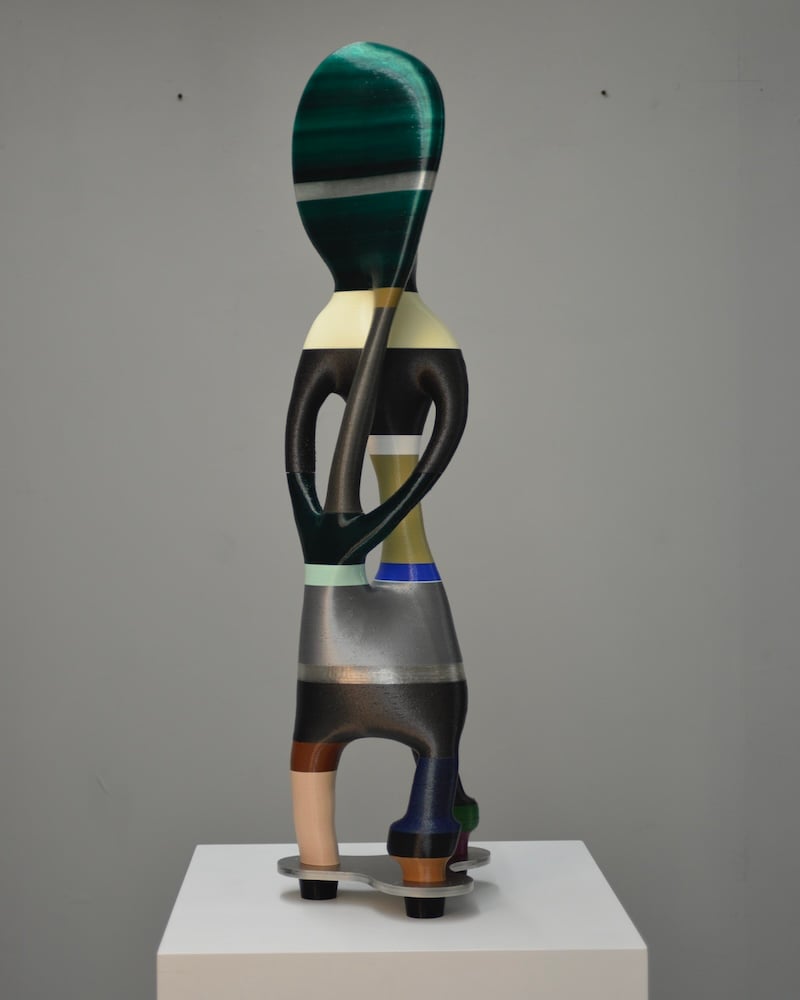
At the moment of the expansion of generative art, when a new participant with exceptional erudition i.e. artificial intelligence, enters the field of creation, the epistemological significance of art and its role in organizing knowledge about the world becomes even more pronounced. The cognitive dimension of (co)working with AI is one of the main aspects of the works by Janek Simon and Wojciech Kucharczyk. Both artists use artificial intelligence to work on a corpus of information, processing it in an artistic manner that primarily serves the production of knowledge about human subjectivity.
Co-creation and Co-cognition
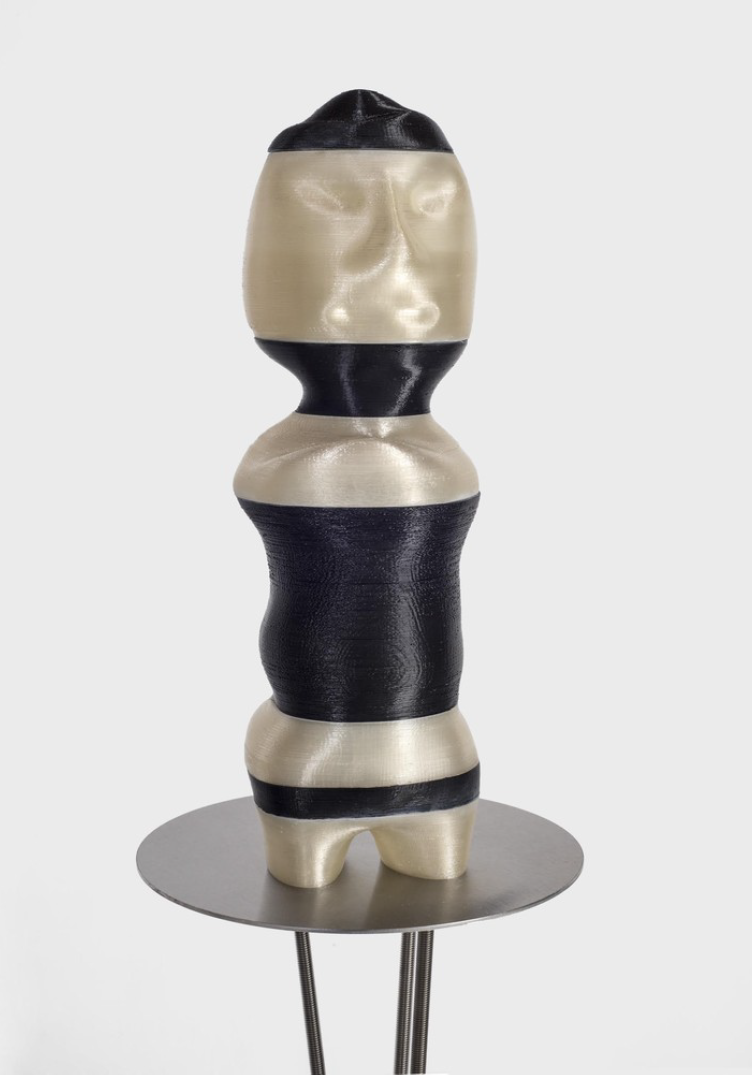
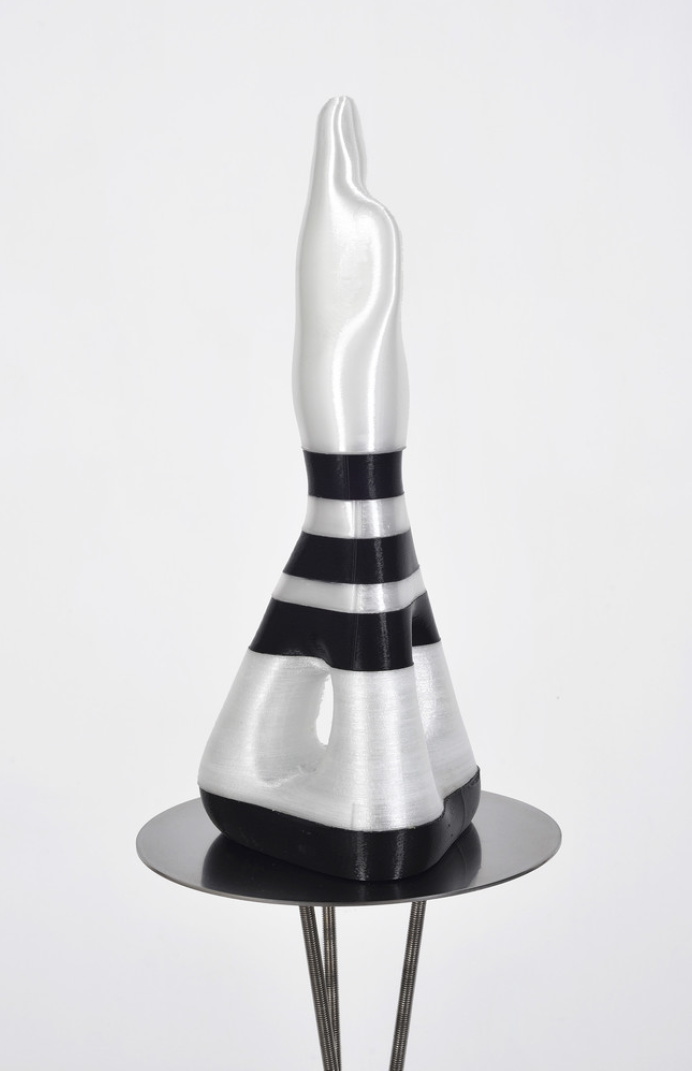
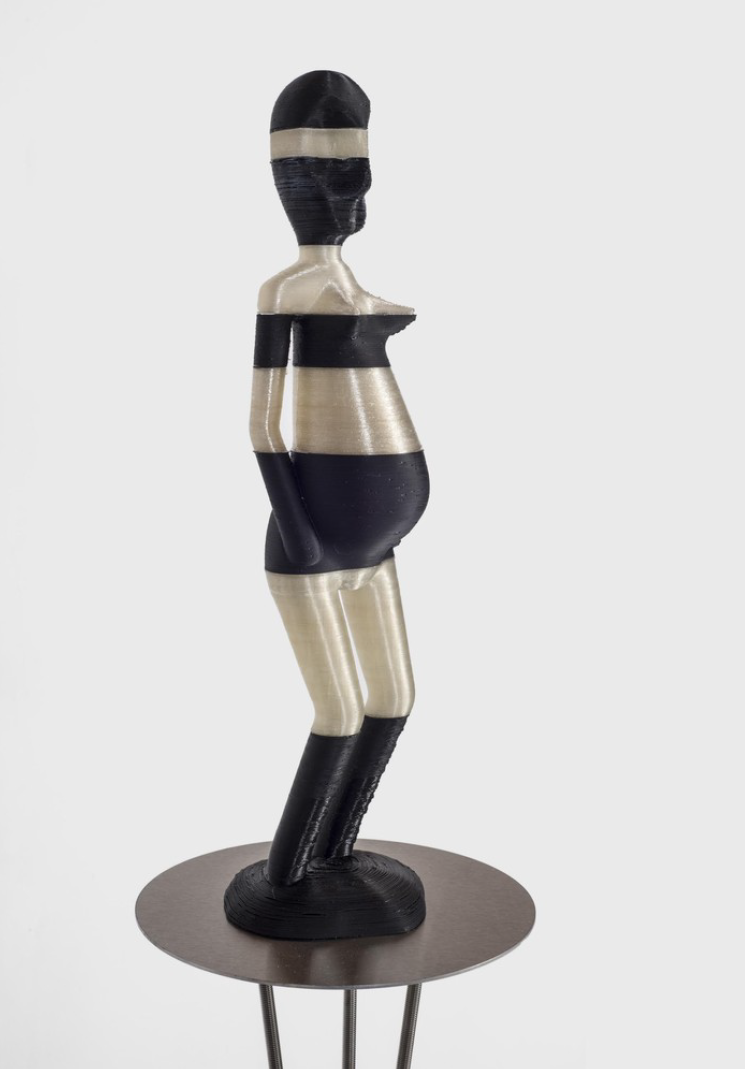
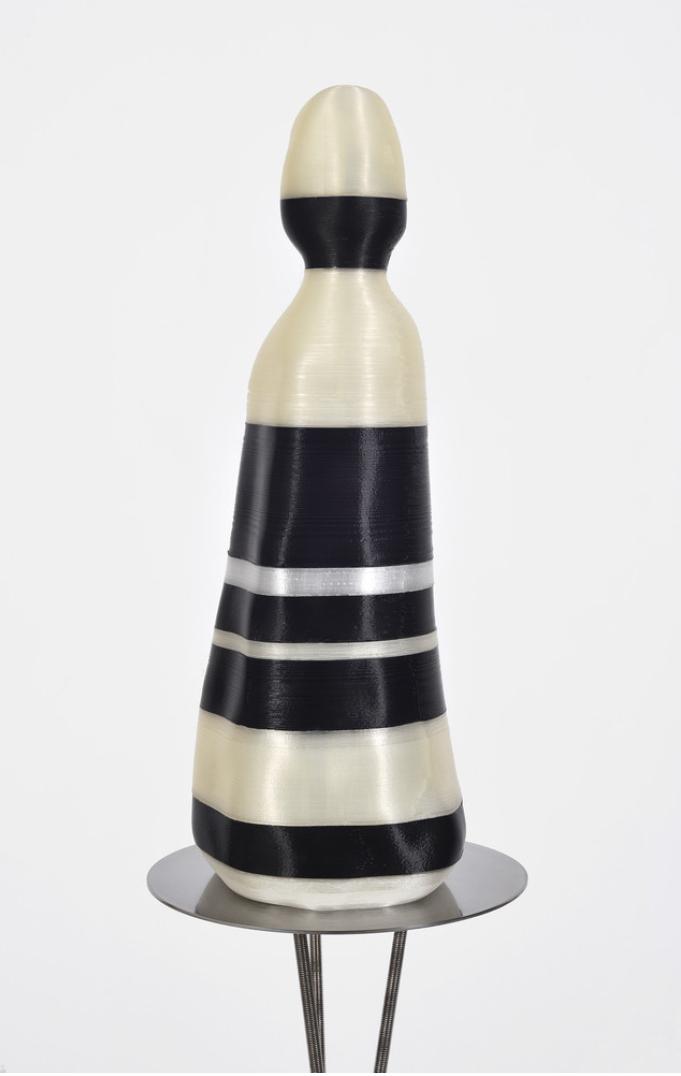
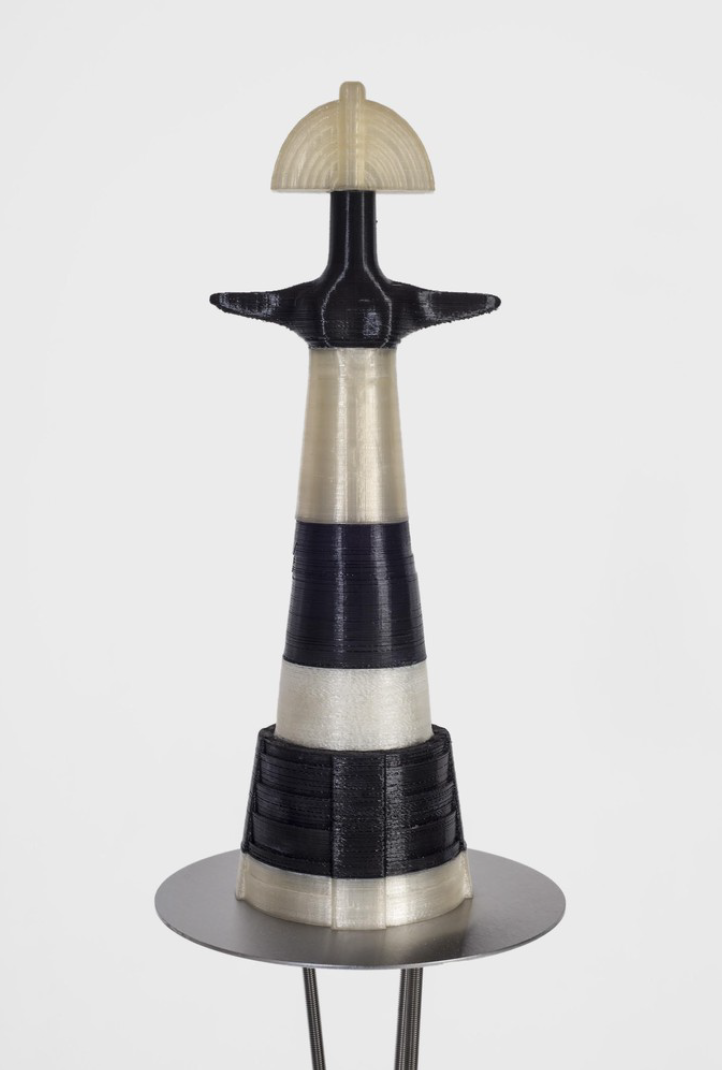
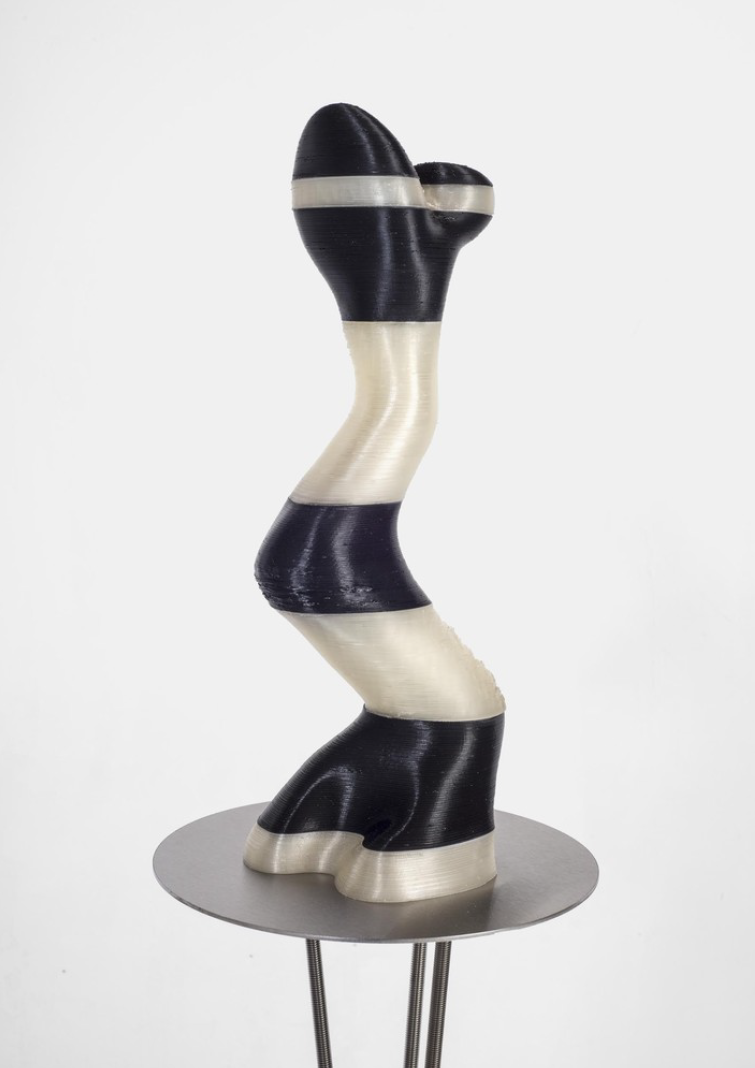
For Janek Simon, the machine is a tool in the hands of the creator. Figures, whose final shapes are based on the designs proposed by neural networks, are printed on self-made 3D printers. The shapes produced by the machines are mutated patterns created from a database that Janek Simon continuously “feeds” with information, providing visualizations of ethnic sculptures from various cultures and epochs.
The relationship between the creator and technology is evident in this case: the artist teaches the machine by providing data, builds the printers, and finalizes the shapes, masking the imperfections left by the technology. Simon takes on a role of a double creator, who not only creates artworks but also the tools necessary for their creation.
Wojciech Kucharczyk’s creative process has a somewhat obverse character, involving collaborative cooperation with a machine. The artist advocates for an exchange of knowledge with a non-human entity. Using an AI-based program to create visual content, Kucharczyk signs his works with his own name and the signature “Aija Midnighttrip,” which is the name of the AI program (Midnighttrip) and the feminine name Aija, used by the artist to personify the algorithm. Despite treating the machine as a collaborator, the patronizing act of giving it a name and identity cannot be overlooked, evoking a multitude of cultural connotations. However, this is not an attempt at domination but rather a reflection of the human desire to animate the machine – imbuing the attributes akin to the Latin root anima (soul).
For Kucharczyk, cooperation with Midnighttrip is a symbiosis based on time and effort, resulting in finding harmony, or as Kucharczyk himself puts it – “catching the flow.” From the artist’s perspective, it is a conceptual work: providing information, guiding, and selecting from the myriad options proposed by the system. Aija Midnighttrip assumes the production role, generating hundreds of thousands of images based on the provided data and guidelines. Importantly, for Kucharczyk, collaboration with the machine has a cognitive dimension, enabling the synthetic processing of vast amounts of information and knowledge that are nearly unattainable for a human.
In the Face of Tradition
The paradox of looking back and recapitulating tradition using the latest – almost futuristic – technologies is a common thread connecting the artistic practices of Janek Simon and Wojciech Kucharczyk. For Simon, the past serves as an archive from which the artist extracts data and information to generate knowledge about the present. He seeks a universal visual language that transcends cultural hierarchies by incorporating motifs from various ethnic traditions, delving into ancient texts and artefacts. Despite undergoing multiple stages of mutations and transformations, the elements of tradition researched and reimagined by Simon are never entirely detached from their original context.
In the Sculptures from the Museum of Man in Paris series, recreated based on drawings by Oskar Hansen and Lech Kunka, the artist employs advanced software, yet without the involvement of artificial intelligence – boldly returning to Polish art history by referencing 20th-century classics and linking national heritage with both the European and global context (reflecting the 20th-century Parisian artistic bohemia’s fascination with anthropology and ethnic art).
Similarly, in the Meta Folklore series, where the artist strongly emphasizes the presence of AI, visualizations of centuries-old works form the foundation for new compositions. By cutting-edge technological tools for retrospection, Simon not only revisits tradition but also modernizes it, situates it in a new context, and challenges its role in a globalized world. This is a matter which remains unresolved.
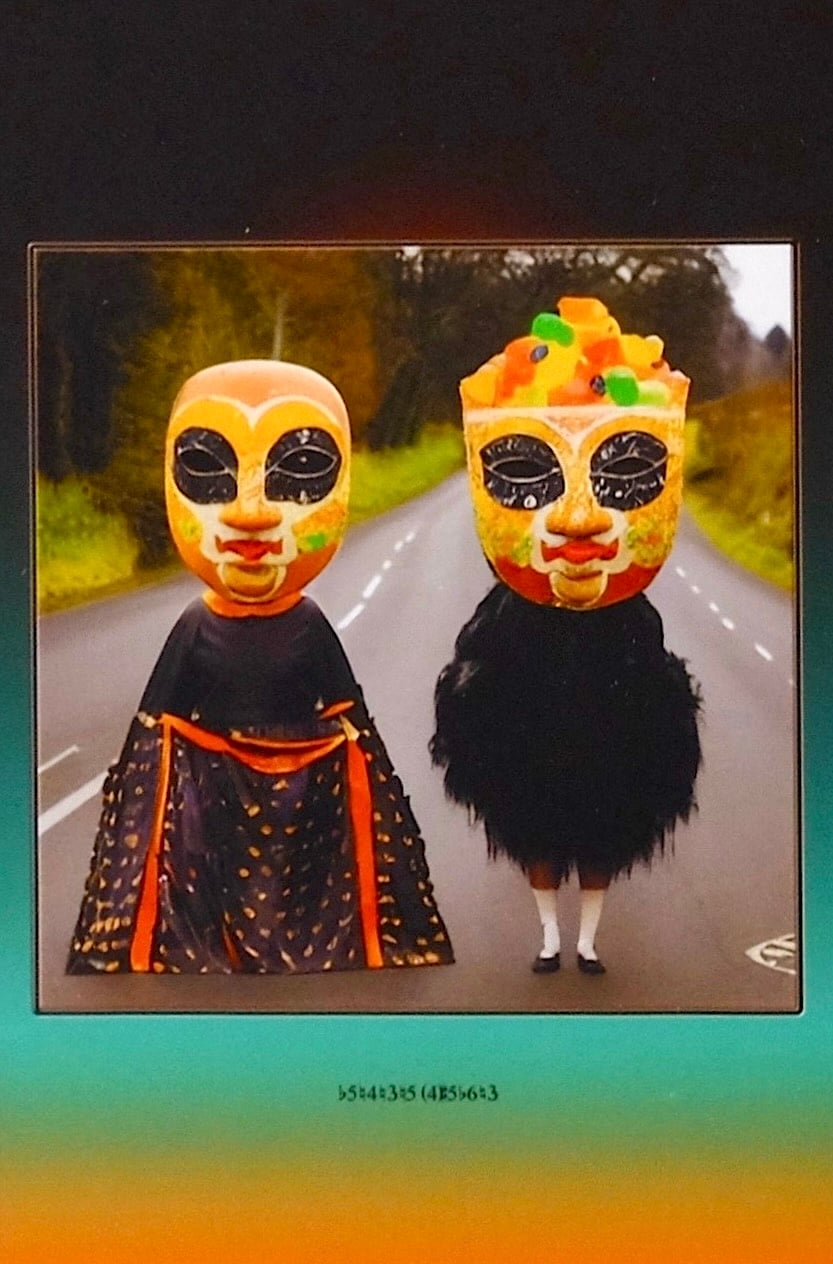
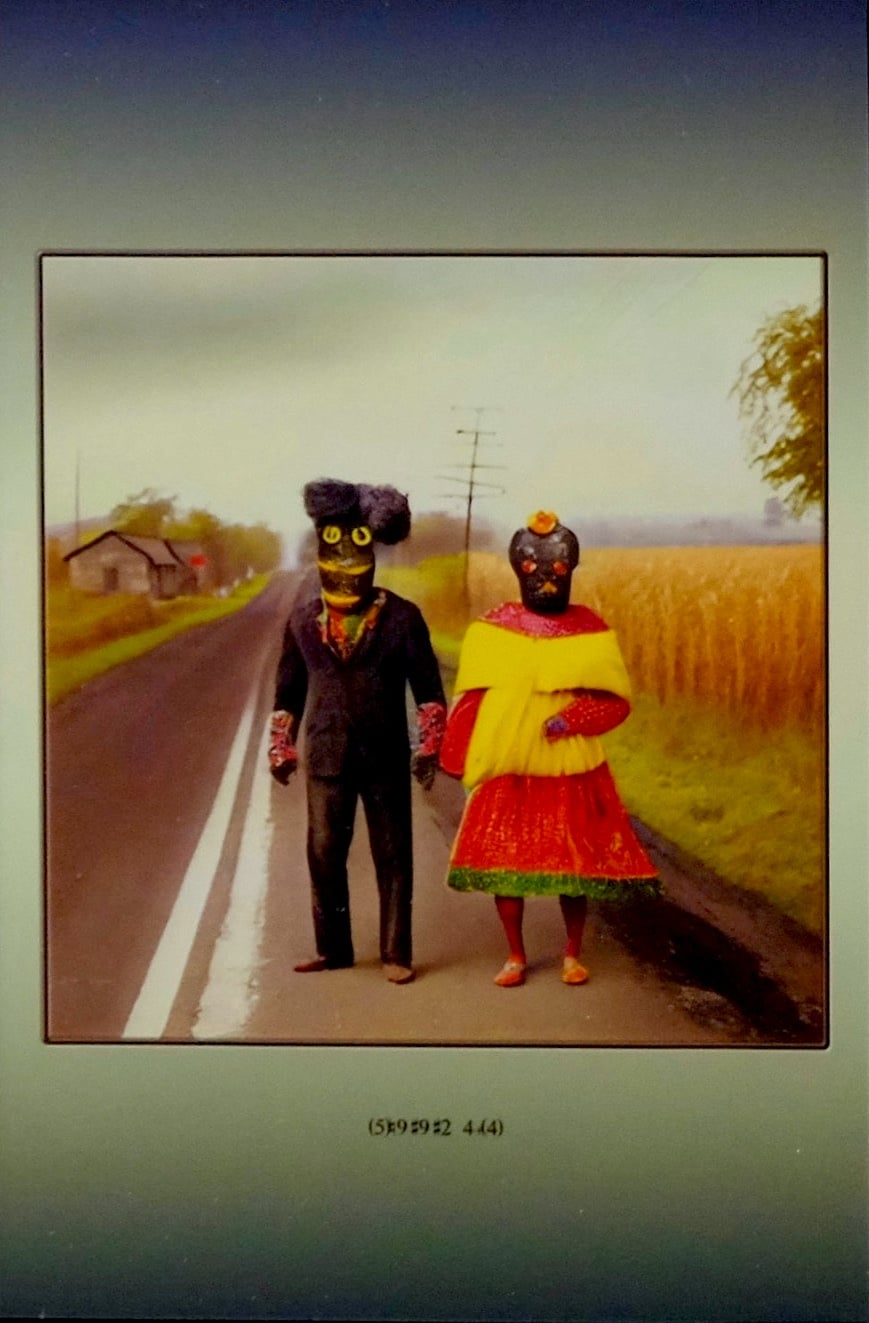
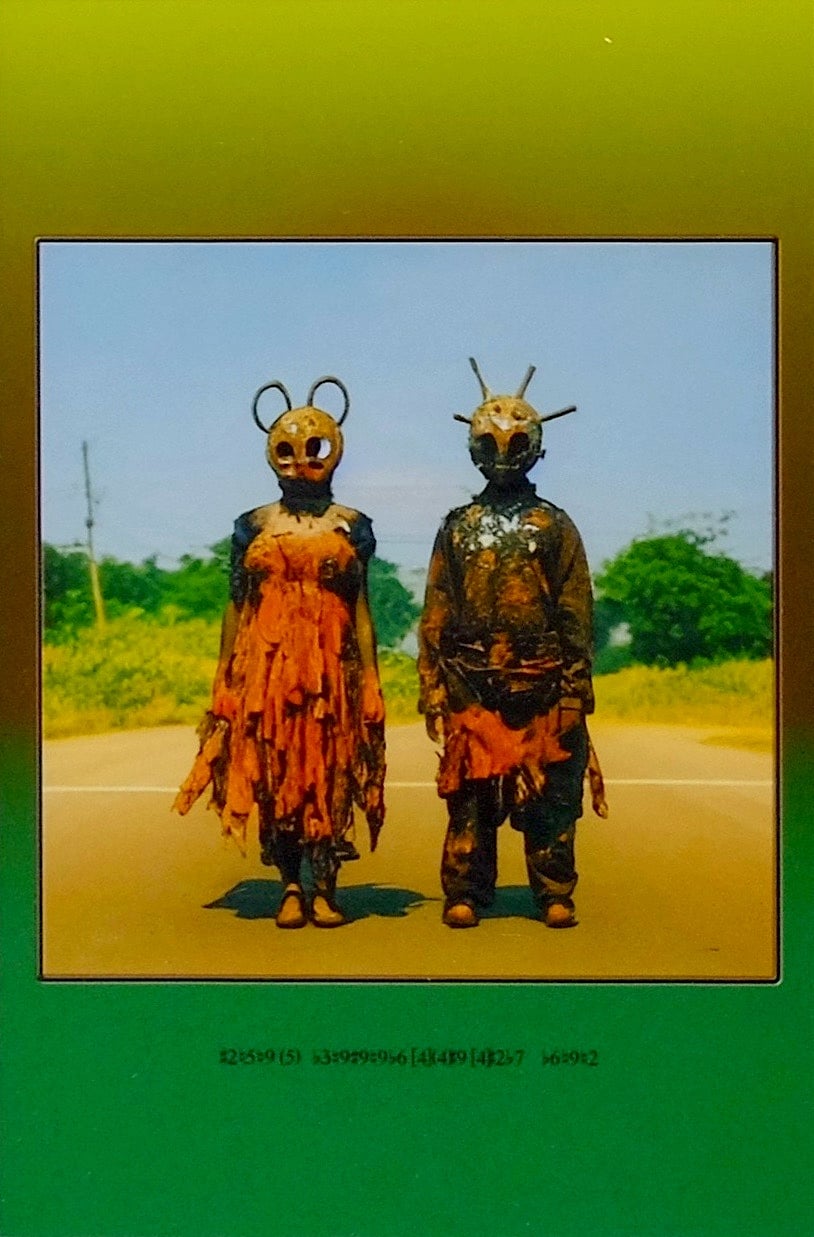
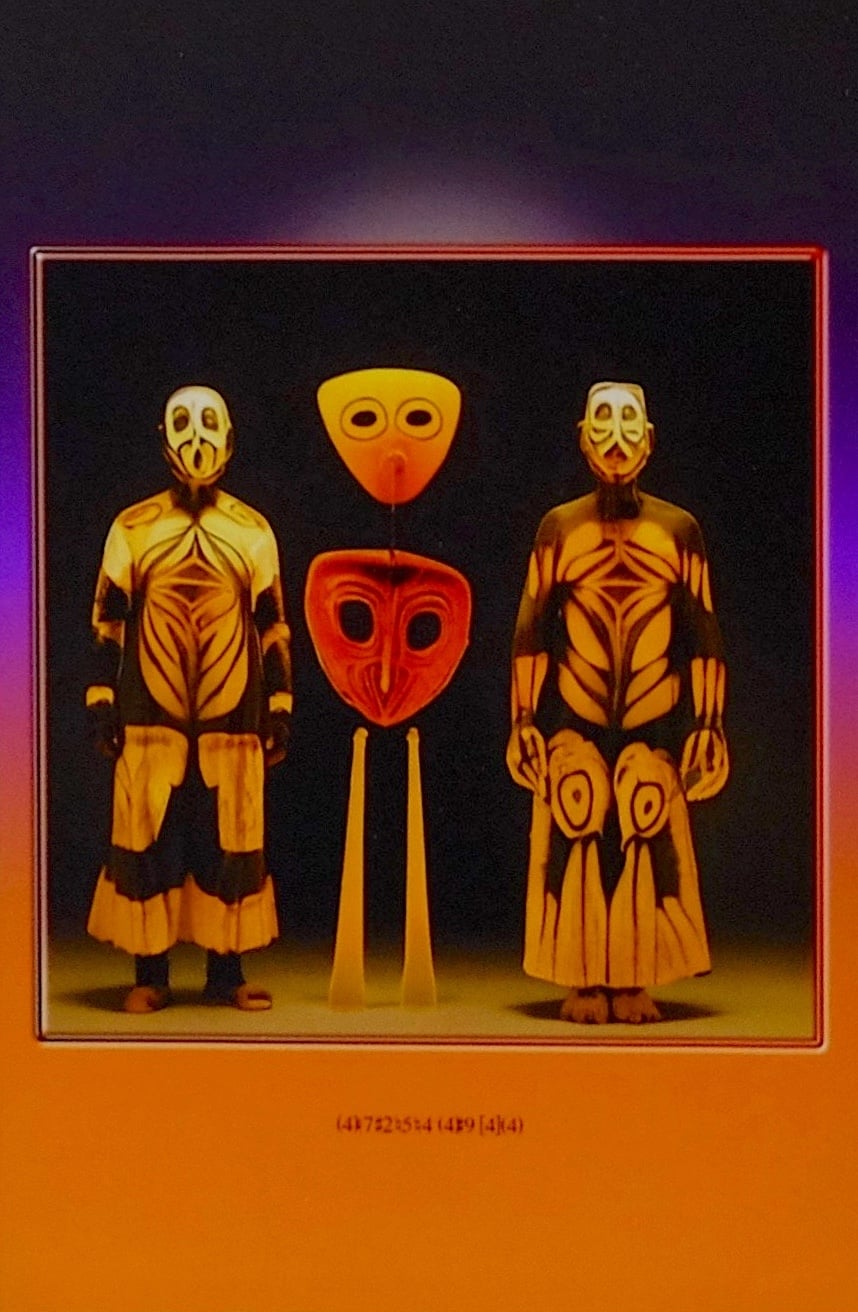
For Wojciech Kucharczyk, working with an artificial intelligence program is based on processing data in an unrestricted manner, free from a linear chronological thinking template. The artist emphasizes his practice of data recycling in an era inundated with images and information. His fascination with geography, mythology, and the rich tradition underlying art history is reflected in the motif of masks and costumes in his work. Kucharczyk states, “I am particularly intrigued by the ethnological aspect of hiding in various cultures.”
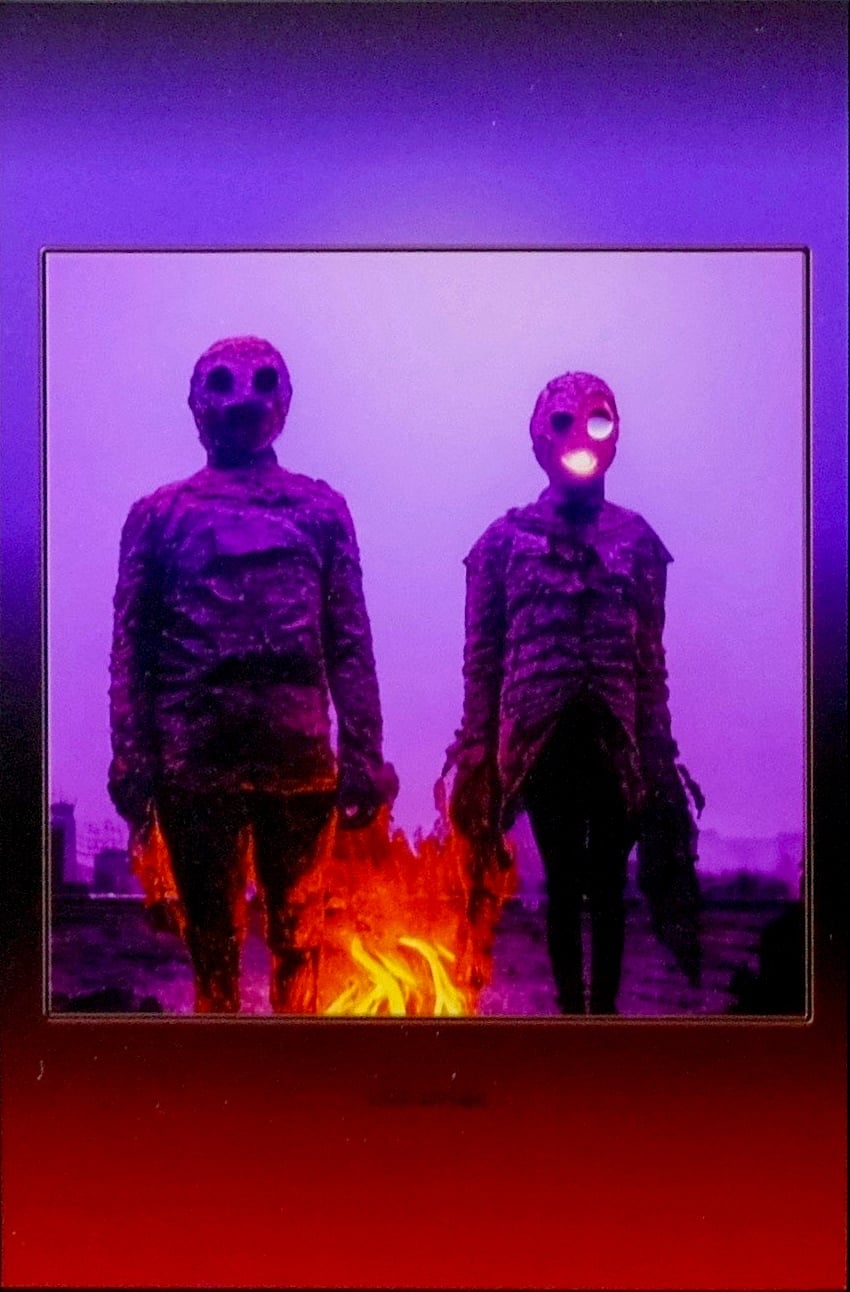
The series Bells of Resistance aka Masks showcases a blend of diverse cultures and historical periods, reimagined through artificial intelligence. The cognitive aspect holds a dual significance for Kucharczyk. On the one hand, collaborating with AI enables him to navigate the vast amount of information on humanity’s cultural heritage, while on the other hand, the machine generates alternative possibilities in numerous variations. In essence, it not only reveals “what tradition was”, but also potentially “what it could have been” or “what it is going to be.” Kucharczyk’s cultural recycling involves interpreting heritage, exploring commonalities and differences among cultures, and crafting a form of fiction – a carnival that aligns with the tradition of mask-wearing and identity transformation.
In the Face of Future
Speculation about the future naturally arises from an interest in tradition. Although artificial intelligence’s abilities to critically process information and forecast based on data analysis remain very limited, artists use AI to create potential worlds. Hence, the frequent motifs of utopia and disaster in the works of creators who integrate technology into their art. In Janek Simon’s early works, artistic computer games featured earthquakes, storms, and fires — foreshadowing an impending catastrophe. In his later works, by drawing on various mythological themes, visual archetypes, and mixing elements from different cultures, Simon points to the identity crisis caused by universalization but simultaneously to the end of the utopian idea of homogeneous national cultures. The contemporary reconstruction of culture using AI provides a potential example of what global culture might look like in the future.
Wojciech Kucharczyk paradoxically comments on the series of works depicting mutated silhouettes in a post-apocalyptic setting with the phrase: “Now is a good time for new utopias, perhaps the most appropriate.” For the artist, the vast amount of data generated and collected by humans in their continuous attempts to understand and explain reality is a harbinger of impending catastrophe. AI, as a tool, offers a kind of cognitive utopia in terms of both knowledge development and generation. However, the projects of both artists strongly emphasize the speculative nature of the knowledge produced, which involves multiple interpretative options for which critical human intellect is necessary for resolution. This serves as a clear counter-argument to all discussions about the threat that AI may pose to human cultural and creative activity. Catastrophic speculations about the future fear excessive technologization and globalization of the world, yet artists point to the possibility of reversing this pattern through a connecting element: the coexistence of cultures and collaboration, including between humans and machines.
Text: Anna Bykova
More about the artists: