Ilhwa Kim,
Developer
Your vision is not the only single one.
Ilhwa Kim
Ilhwa Kim is a Korean artist who combines elements of sculpture, painting, and organic architecture in her art. Her works hypnotize with their textural richness and initiate reflection on the meaning of perception and perspective.
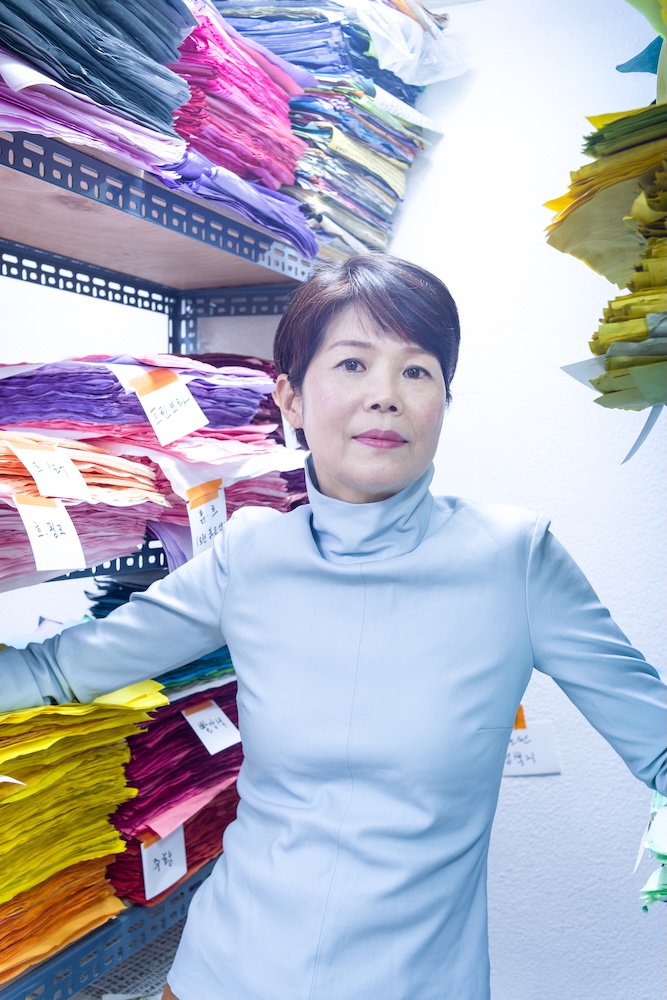
Ilhwa Kim, phot. Laam Yi, courtesy of HWALAAM Studio
Perspective – The Key
to Interpretation
One of the key themes in Ilhwa Kim’s work is perspective – both in an optical and a metaphorical sense. Even before Kim discovered her own artistic language, she was inspired by an experience on an airplane: passing the same location at different times of day, the artist noticed how the landscape varied depending on meteorological factors, light, and altitude. This observation of the earth prompted broader reflections on the ambiguity of an image and the ways in which it shifts with a change in viewpoint.
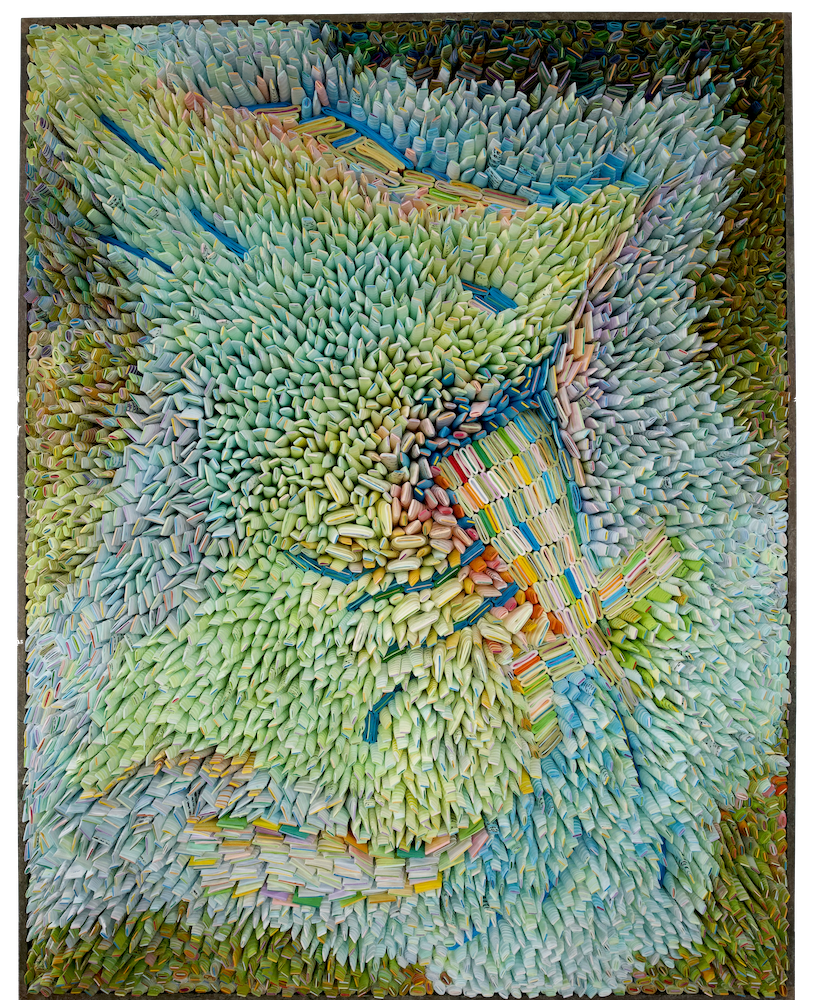
Hand-dyed Hanji Paper, 119 x 93 x 13 cm
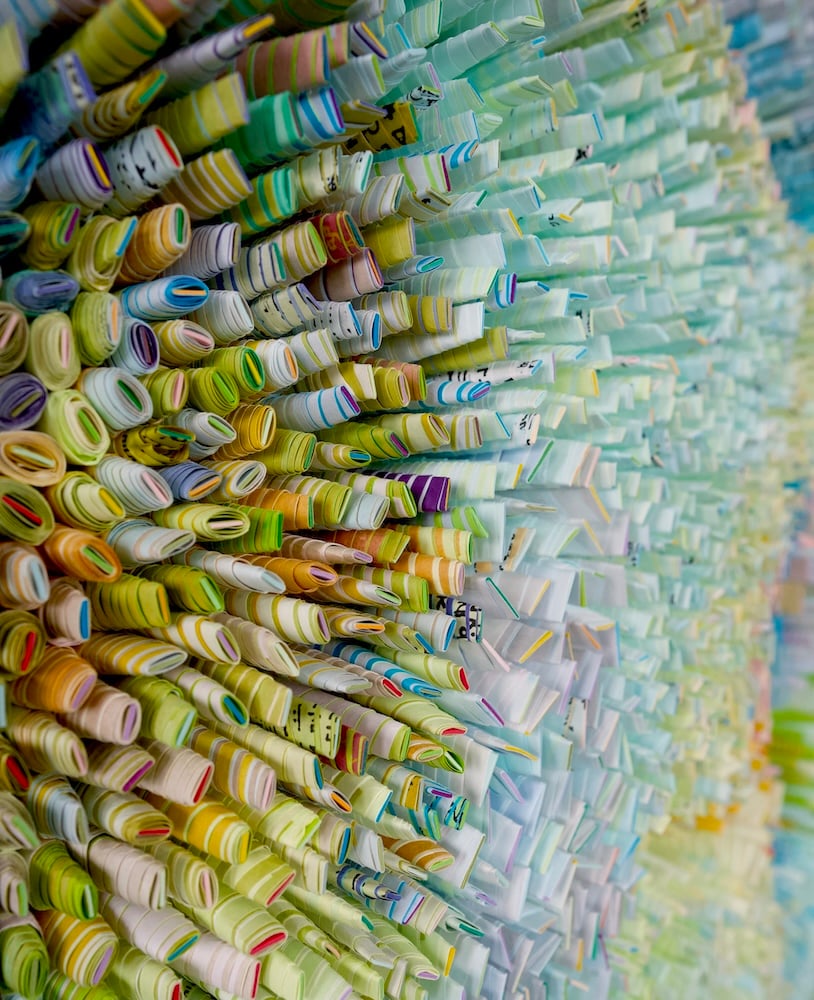
Her relief compositions, when viewed up close, reveal details with distinct shapes and hues. From a distance, the works begin to coalesce into abstract landscapes reminiscent of views of cities, forests, or bodies of water seen from above. However, it is important not to confine oneself to a single, head-on perspective – Kim’s pieces are three-dimensional and invite active exploration from all angles.
The issue of viewpoints can be explained by the unique physicality of the artworks, which allows them to be perceived both as a cohesive structure or landscape and as thousands of individual elements. Close-up views, distance, and different perspectives are not just recommended in this case – they are essential.
At the same time, Kim refers to painting – employing rhythm, color, and the impression of movement. The key idea is how Ilhwa Kim’s works integrate elements of painting’s art history into a newly structured relief surface. Each “seed” imitates a “brushstroke,” evoking the historical struggles surrounding the painterly gesture in modern and contemporary art – from Cézanne to Pollock – as well as the transition from art materials constrained by traditional frameworks to diverse material explorations in contemporary art. In this case, the sculptural process intertwines with a painterly sensitivity. The artist also takes inspiration from organic architecture, characterized by fluid forms and the imitation of structures found in nature.
Technique and Material: Art Born From “Seeds”
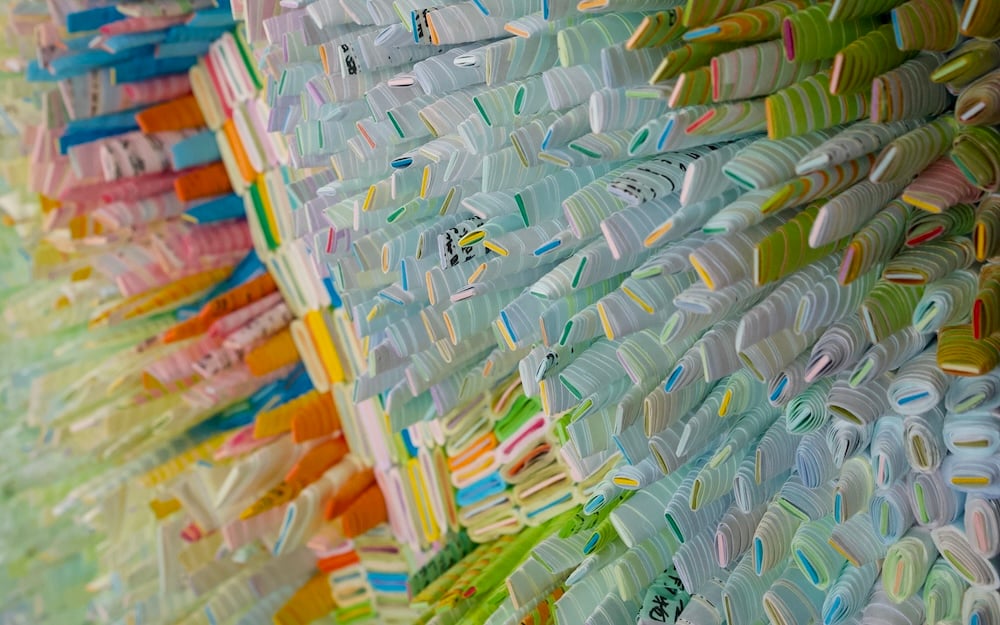
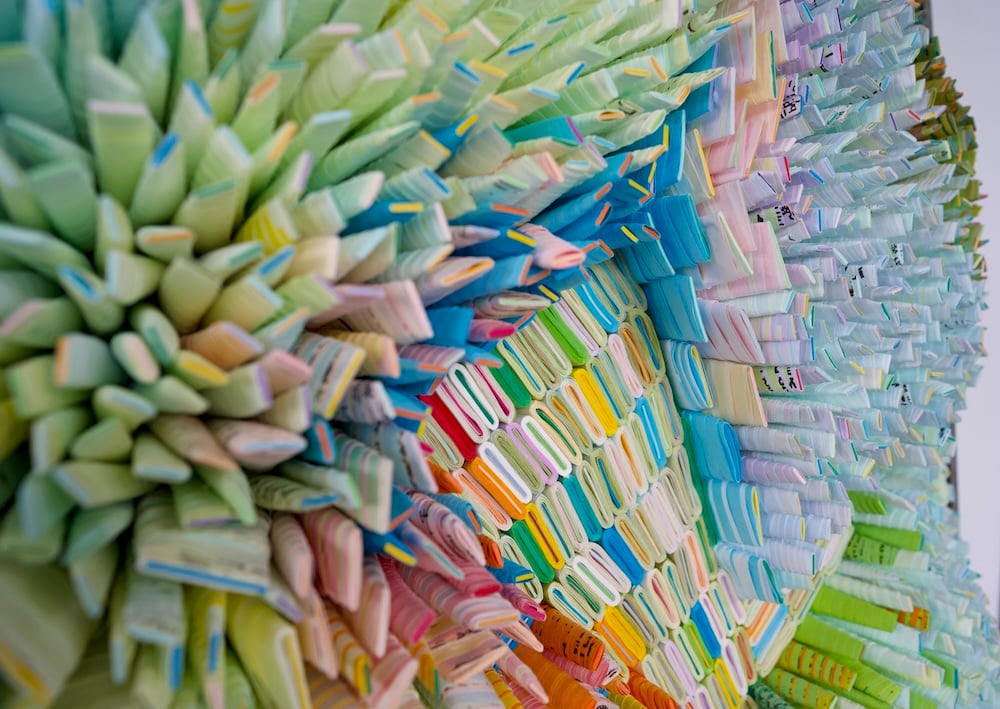
Ilhwa Kim creates her works from thousands of small pieces of paper, which she herself calls “seeds.” Each one is painted, cut, and handcrafted by the artist, then assembled into structures reminiscent of relief landscapes. The time-consuming nature of this process means that a single work may require several weeks – or sometimes even several months – of labor.
References to nature are found not only in the “seeds” from which her pieces are composed but also in the choice of materials. A significant aspect of her art is the use of traditional Korean hanji paper, handmade from the bark of the mulberry tree. Hanji is renowned for its durability, flexibility, and ability to preserve colors for hundreds of years. Kim also uses a natural wheat-based glue instead of synthetic adhesives, placing her work within the long tradition of craftsmanship in the Far East. Her pieces thus represent not only an experimental form of expression but also a subtle homage to Korea’s artistic heritage.
Between Sculpture and Painting
Although Ilhwa Kim’s works are most often presented in frames like paintings, the artist emphasizes their sculptural character. The creative process is based on building form in a manner akin to sculpture – by adding successive layers and shaping a multidimensional surface.
At the same time, Kim refers to painting – employing rhythm, color, and the impression of movement. The key idea is how Ilhwa Kim’s works integrate elements of painting’s art history into a newly structured relief surface. Each “seed” imitates a “brushstroke,” evoking the historical struggles surrounding the painterly gesture in modern and contemporary art – from Cézanne to Pollock – as well as the transition from art materials constrained by traditional frameworks to diverse material explorations in contemporary art. In this case, the sculptural process intertwines with a painterly sensitivity. The artist also takes inspiration from organic architecture, characterized by fluid forms and the imitation of structures found in nature.
Ilhwa Kim in the dela.art collection
Within the dela.art collection, Ilhwa Kim’s work completes a series dedicated to alternative artistic materials and unconventional creative processes. Meanwhile, inspirations drawn from nature and the pursuit of using natural materials perfectly align with the thematic focus of the collection, which centers on works devoted to the relationship between humans and the environment.
Text: Anna Bykova